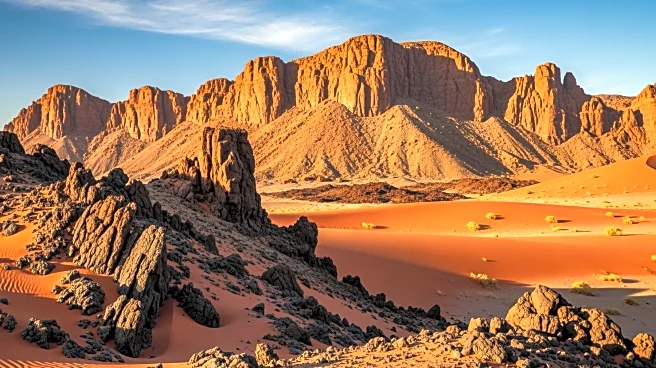



The Leucite Hills in southwestern Wyoming are an isolated volcanic field known for their unique geological features. Situated on the northern flank of the Rock Springs Uplift within the Green River Basin, the Leucite Hills are one of the largest and most significant lamproite provinces in the world. This area consists of 22 distinct volcanic features, including lava-capped mesas, buttes, cinder cones, dikes, and volcanic necks.
Geological Formation and Features
The Leucite Hills are
the result of deep-sourced magmatism, with magma originating from partial melting of the metasomatized Archean mantle at depths exceeding 90 miles. This magmatic activity caused deep crustal fractures, particularly the northwest-trending Farson Lineament. Prominent landmarks in the area include Boars Tusk, a 400-foot volcanic neck, and Zirkel Mesa, the largest lava flow in the region.
Several rare, potassium-rich igneous rocks can be found in the Leucite Hills, historically classified into three main types: Wyomingite, Orendite, and Madupite. These rocks were once considered a potential domestic source of potash for fertilizer during the early 20th century. The Wyoming State Geological Survey has conducted reconnaissance for diamond potential, as lamproites can host diamonds, though no commercial deposits have been found.
The Killpecker Sand Dunes and Wind Patterns
The Leucite Hills create a natural "gap" or funnel that influences local wind patterns. Prevailing westerly winds carry sand and silt from the Green River Basin and the Wind River Mountains. As these winds are squeezed through the gap between the Leucite Hills and the surrounding uplands, they accelerate and drop their sediment load on the leeward side, creating the massive Killpecker Sand Dunes.
These dunes are part of Wyoming's Red Desert and are a significant geological feature in the region. The interaction between the Leucite Hills and the sand dunes highlights the dynamic nature of the area's geology and the impact of wind patterns on sediment deposition.
Economic and Ecological Impact
The surrounding Rock Springs Uplift is a major province for natural gas and coal production, contributing to the region's economic significance. Additionally, gem-quality olivine (peridot) has been identified in the northeastern portion of the volcanic field, adding to the area's mineral wealth.
The Leucite Hills and their unique geological features have also influenced the local ecology. The volcanic formations provide habitats for various plant and animal species, contributing to the biodiversity of the Red Desert. The area's geological and ecological significance makes it a subject of interest for both scientific research and conservation efforts.