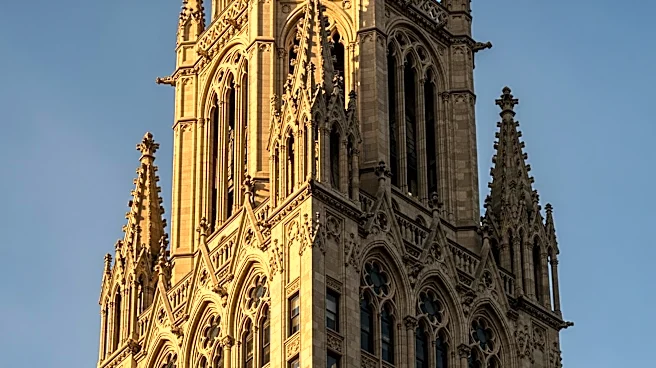

The Woolworth Building has been a prominent fixture in New York City's skyline since its completion in 1913. Designed by Cass Gilbert, it was the tallest building in the world until 1930. Over the years,
the building has undergone several changes, reflecting the evolving needs of its occupants and the city itself. This article explores the historical journey of the Woolworth Building.
Early Years and Construction
The Woolworth Building was conceived by F. W. Woolworth as a headquarters for his company. Initially planned as a 12- to 16-story commercial building, the design underwent several revisions, ultimately reaching a height of 792 feet. Construction began in 1910 and was completed in 1913, with the building officially opening on April 24 of that year.
The building's opening was marked by a grand dinner attended by notable figures, including President Woodrow Wilson, who turned on the building's lights remotely from Washington, D.C. The Woolworth Building quickly became a symbol of modernity and progress, attracting tenants from various industries.
Mid-20th Century Changes
Throughout the 20th century, the Woolworth Building experienced several changes. The facade was cleaned in 1932, and an extensive renovation took place between 1977 and 1981. During this renovation, much of the terracotta was replaced with concrete, and some Gothic ornamentation was removed.
The building's ownership also changed hands multiple times. The Irving National Exchange Bank moved its headquarters in 1931, but the Woolworth Company continued to own the building for most of the century. In 1998, the structure was sold to the Witkoff Group, marking a new era in its history.
Modern Developments
In 2012, the top 30 floors of the Woolworth Building were sold to a developer and converted into residences. This marked a significant shift from its original purpose as a commercial office space. The lower floors continue to house office and commercial tenants, maintaining the building's role as a hub of business activity.
The Woolworth Building has been recognized as a National Historic Landmark since 1966 and a New York City designated landmark since 1983. These designations reflect its importance in architectural and cultural history. As the building continues to evolve, it remains a testament to the vision of its creator and the dynamic nature of New York City.