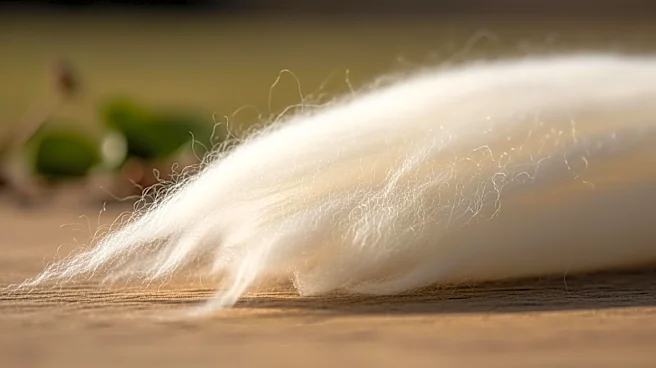







Angora wool, known for its softness and warmth, is produced primarily from Angora rabbits. The global production of this luxurious fiber is concentrated in a few key regions, with China leading the way. This article provides an overview of the global production of Angora wool and the methods used to harvest it, highlighting the differences in practices across various regions.
Major Producers of Angora Wool
China is the dominant player in the global Angora wool market, producing
approximately 90% of the world's supply. The country is home to more than 50 million Angora rabbits, which collectively produce between 2,500 and 3,000 tons of wool annually. The scale of production in China far surpasses that of other regions, making it the primary source of Angora wool for the global market.
In addition to China, smaller quantities of Angora wool are produced in Europe, Chile, and the United States. These regions contribute to the diversity of the Angora wool market, offering different qualities and types of wool based on the breeds of rabbits and the methods of production used. Despite their smaller scale, these producers play a crucial role in meeting the demand for Angora wool worldwide.
Harvesting Methods
The harvesting of Angora wool involves either plucking or shearing the rabbits' fur. Most breeds of Angora rabbits naturally molt every four months, allowing producers to pluck the fur during this natural shedding process. Plucking is preferred by some producers as it results in higher quality wool with minimal guard hair and less matting.
However, plucking is a time-consuming process, leading some producers to opt for shearing instead. Shearing involves cutting the fur with clippers or scissors, which is quicker and results in more fleece. While shearing includes more guard hairs, it is a practical choice for producers looking to maximize yield. Notably, not all breeds of Angora rabbits molt naturally, such as the German Angora, which requires shearing.
Challenges and Considerations
The production and harvesting of Angora wool come with several challenges, including the need for regular grooming to prevent matting and felting of the fur. Rabbits must be groomed at least once or twice a week to maintain the quality of the wool and prevent health issues such as wool block, a potentially lethal condition caused by the ingestion of fur.
In conclusion, the global production and harvesting of Angora wool are complex processes influenced by regional practices and the characteristics of different rabbit breeds. While China remains the largest producer, other regions contribute to the diversity and availability of this luxurious fiber. Understanding the methods and challenges involved in Angora wool production is essential for appreciating the value and uniqueness of this sought-after material.