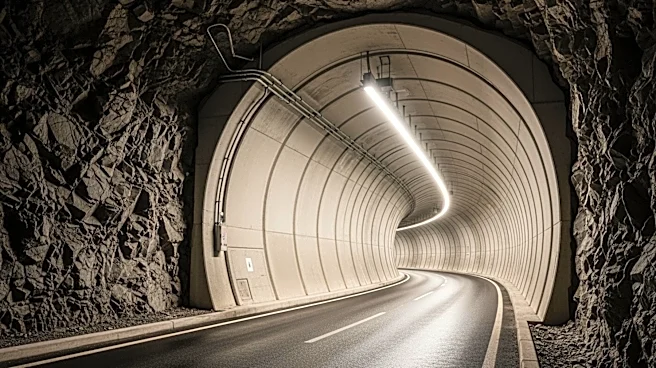





The Brooklyn–Battery Tunnel, officially known as the Hugh L. Carey Tunnel, is a testament to human ingenuity and engineering prowess. As the longest continuous underwater vehicular tunnel in North America, it connects Red Hook in Brooklyn with the Battery in Manhattan. The tunnel's construction involved overcoming significant engineering challenges, making it a marvel of modern infrastructure.
Design and Construction Techniques
The Brooklyn–Battery Tunnel consists of two two-lane tubes,
each stretching 9,117 feet from portal to portal. The tunnel's design was initially commissioned by the New York City Tunnel Authority, with chief engineer Ole Singstad creating the original plans. The tunnel was designed to pass underneath the East River, connecting the southern tip of Manhattan to Brooklyn.
The construction of the tunnel involved innovative techniques to address the challenges posed by its underwater location. The tunnel's tubes were constructed using the shield method, a technique that allowed workers to excavate the riverbed while simultaneously installing the tunnel lining. This method was crucial in maintaining the structural integrity of the tunnel while minimizing the risk of flooding.
Overcoming Challenges
One of the significant challenges faced during the construction of the Brooklyn–Battery Tunnel was the need to maintain a pressurized environment to prevent water from entering the excavation site. This required the use of airlocks and pressurized chambers, allowing workers to safely operate in the tunnel's depths.
The construction also faced delays due to material shortages during World War II. Despite these setbacks, the project continued, driven by the city's need for improved transportation infrastructure. The tunnel's completion was further complicated by the need to coordinate with various city agencies and secure funding from multiple sources.
Ventilation and Safety Features
The Brooklyn–Battery Tunnel's design includes several innovative features to ensure the safety and comfort of its users. The tunnel is equipped with a state-of-the-art ventilation system, capable of replacing the tunnel's air every 90 seconds. This system consists of 53 fans, each with a diameter of eight feet, capable of blowing 25,000 short tons of clean air into the tunnel every hour.
The tunnel also includes flood doors at each portal, designed to protect against potential flooding. These doors weigh 20 short tons and are 2 feet thick, providing a robust barrier against water ingress. Additionally, the tunnel's lighting system was the first in the city to use fluorescent lights, providing continuous illumination and enhancing visibility for drivers.
The Brooklyn–Battery Tunnel stands as a remarkable achievement in engineering, reflecting the innovative spirit and determination of those who built it. Its construction required overcoming significant challenges, from material shortages to complex engineering problems. Today, the tunnel continues to serve as a vital transportation link, a testament to the enduring legacy of its creators.