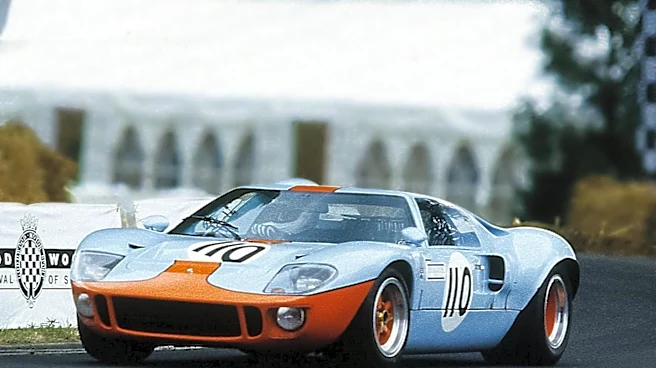





The 1967 24 Hours of Le Mans was a defining moment for Ford, showcasing their dominance in endurance racing. This race was part of the 1967 World Sportscar Championship and saw Ford's Mk IV, driven by Dan Gurney and A.J. Foyt, claim victory. This article explores Ford's strategic approach, the challenges they faced, and how they managed to secure a historic win at Le Mans.
Strategic Preparation and Execution
Ford's preparation for the 1967 Le Mans was meticulous, with a focus on both speed and reliability. The Mk IV was an updated version of the Ford J-Car, featuring an all-new chassis designed and built in the United States. The car was equipped with a powerful 7-liter engine, capable of producing 530 bhp, which gave it a significant advantage on the long straights of the Circuit de la Sarthe.The team's strategy was to maintain a consistent pace while minimizing time
spent in the pits. This approach required careful management of the car's components, particularly the tires and brakes, which were subjected to extreme stress over the 24-hour race. Ford's decision to partner with Goodyear for tires proved to be a wise choice, as they provided the necessary grip and durability to withstand the demands of the race.
Overcoming Challenges
Despite their preparation, Ford faced several challenges during the race. Mechanical issues plagued many of the early leaders, including some of Ford's own cars. However, the Mk IV driven by Gurney and Foyt managed to avoid major problems, thanks in part to the team's rigorous testing and development process.The race was not without its dramatic moments. Ford's main competitors, Ferrari and Porsche, were formidable opponents, each with their own strengths. Ferrari's cars were known for their agility and handling, while Porsche's entries were renowned for their reliability. However, Ford's combination of speed, power, and strategic pit stops allowed them to maintain their lead and ultimately secure the victory.
A Historic Victory
Ford's triumph at the 1967 Le Mans was a significant achievement, marking the first and only all-American victory in the history of the race. The success of the Mk IV was a testament to the capabilities of American engineering and racing talent. This victory not only solidified Ford's reputation in the world of motorsport but also inspired future generations of American racers and manufacturers.The 1967 Le Mans was a turning point for Ford, demonstrating their ability to compete and win on the international stage. The lessons learned from this race would influence Ford's approach to racing and automotive design for years to come, leaving a lasting impact on the industry.