



Carburetors play a crucial role in the operation of gasoline engines by mixing air and fuel in the correct ratio for combustion. Despite being largely replaced by fuel injection systems, carburetors remain an important part of automotive history. This article delves into the mechanics of carburetors, explaining their components and how they function.
The Basic Components of a Carburetor
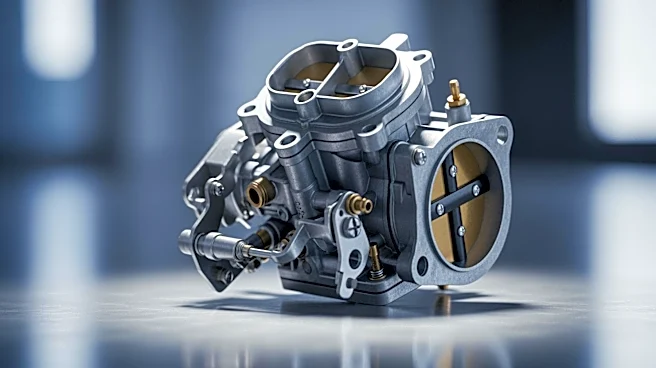
A typical carburetor consists of several key components, including the airhorn, throttle body, float
bowl, and various fuel circuits. The airhorn is the entry point for air, which is then mixed with fuel within the carburetor. The throttle body controls the amount of air entering the engine, and is usually connected to the vehicle's throttle pedal.
The float bowl acts as a reservoir for fuel, maintaining a constant level to ensure a steady supply to the engine. This is achieved through a float mechanism that regulates the flow of fuel into the bowl. The main metering circuit, which includes a venturi or choke, is responsible for introducing fuel into the airstream. As air passes through the venturi, its speed increases, creating a pressure drop that draws fuel into the mixture.
Operating Principles and Fuel Circuits
Carburetors operate on the principles of the Venturi effect and Bernoulli's principle. As air flows through the carburetor, the pressure drop in the venturi causes fuel to be drawn into the airstream. This process is finely tuned to ensure the correct air-fuel ratio for efficient combustion.
In addition to the main metering circuit, carburetors feature several auxiliary circuits to manage different engine conditions. The idle circuit provides fuel when the engine is running at low RPM, while the off-idle circuit assists during the transition from idle to higher speeds. A power valve or metering rod may be used to supply extra fuel under high load conditions, enhancing engine performance.
Challenges and Solutions in Carburetor Design
One of the challenges in carburetor design is managing fuel delivery during cold starts. To address this, carburetors are equipped with a choke, which restricts airflow to enrich the fuel mixture. This helps the engine start and run smoothly until it reaches operating temperature. Modern carburetors often use automatic chokes, which adjust based on engine temperature.
Another issue is carburetor icing, which occurs when the temperature drop in the venturi causes moisture to freeze on internal surfaces. This can restrict airflow and disrupt engine performance. To combat this, aircraft engines often use carburetor heat systems, while road vehicles may circulate warm coolant or exhaust gases through the carburetor.
Despite their complexity, carburetors are a testament to the ingenuity of early automotive engineering. Understanding their mechanics provides insight into the evolution of fuel delivery systems and the challenges faced by engineers in optimizing engine performance.