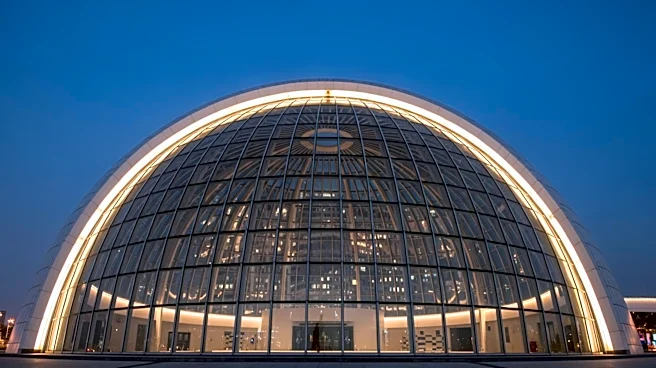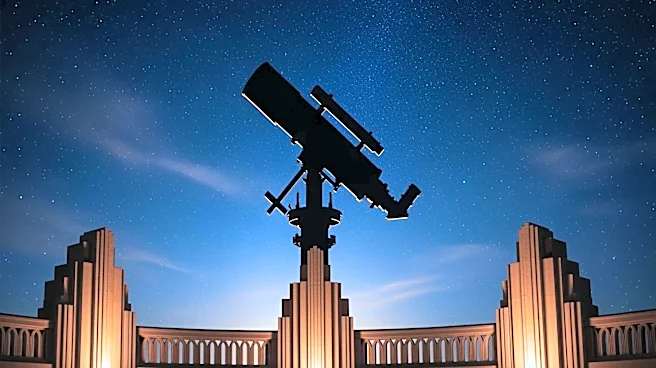






Griffith Observatory, located in Los Angeles, California, has been a beacon of public astronomy since its opening in 1935. Situated on the south-facing slope of Mount Hollywood in Griffith Park, the observatory offers stunning views of the Los Angeles Basin, including Downtown Los Angeles, Hollywood, and the Pacific Ocean. This article explores the rich history of the observatory, from its inception to its role in public education and its ongoing
legacy.
The Vision of Griffith J. Griffith
The story of Griffith Observatory begins with Griffith J. Griffith, who donated 3,015 acres of land to the City of Los Angeles in 1896. His vision was to create a public space where people could learn about astronomy, a field that was traditionally reserved for scientists in remote locations. Griffith's will included funds to build an observatory, exhibit hall, and planetarium, with the stipulation that admission would always be free. This was a revolutionary idea at the time, as it aimed to make astronomy accessible to everyone.
Griffith consulted with prominent astronomers like Walter Sydney Adams and George Ellery Hale to draft the observatory's plans. Construction began in 1933, with architects John C. Austin and Frederic M. Ashley designing the building based on sketches by Russell W. Porter. The observatory opened to the public on May 14, 1935, and quickly became a popular attraction, drawing over 13,000 visitors in its first five days.
A Center for Education and Training
Throughout its history, Griffith Observatory has played a significant role in education and training. During World War II, the planetarium was used to train pilots in celestial navigation. This training continued into the 1960s, preparing Apollo program astronauts for lunar missions. The observatory's commitment to education is evident in its extensive array of space and science-related displays, which have been updated and expanded over the years.
In 1978, the Griffith Observatory Foundation was established to support the observatory's mission of public astronomy. The foundation has been instrumental in advocating for the restoration and expansion of the observatory, ensuring that it remains a vital resource for science literacy and education.
Renovation and Modernization
In 2002, the observatory closed for a major renovation and expansion, reopening in 2006. The $93 million project, funded largely by a public bond issue, restored the building's Art Deco exterior and replaced the aging planetarium dome. The expansion included new underground exhibit spaces, a café, a gift shop, and the Leonard Nimoy Event Horizon Theater.
Today, Griffith Observatory continues to inspire and educate visitors from around the world. With its rich history and commitment to public access, it stands as a testament to Griffith J. Griffith's vision of making astronomy accessible to all.