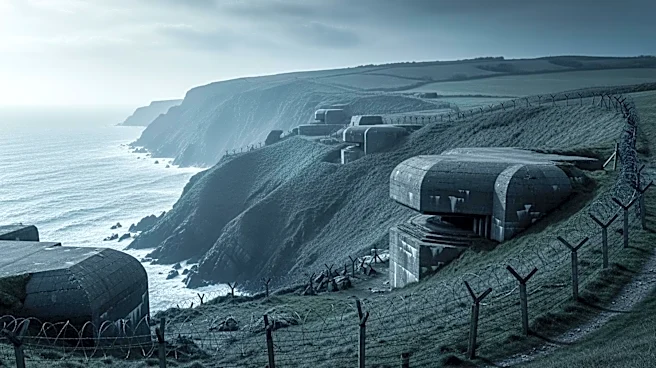







Operation Overlord, the Allied invasion of Normandy, posed a significant challenge to the German forces defending the French coast. This article analyzes the German defensive strategy during Operation Overlord, exploring their preparations, challenges, and the impact of their decisions on the outcome of the invasion.
Preparations and Defensive Measures
In anticipation of an Allied invasion, the German forces under Field Marshal Erwin Rommel undertook extensive preparations to strengthen
the Atlantic Wall along the French coast. This included the construction of concrete gun emplacements, the placement of wooden stakes, metal tripods, mines, and large anti-tank obstacles on the beaches.
Rommel expected the Allies to land at high tide, so many obstacles were placed at the high-tide mark to delay the approach of landing craft and impede the movement of tanks. The terrain at Utah Beach, for example, was flat, offering no high ground for fortifications, and the Germans flooded the land behind the beach to restrict movement.
Challenges and Miscalculations
Despite these preparations, the German defensive strategy faced significant challenges. The German forces were spread thin along the coast, with many units composed of poorly equipped non-German conscripts. The 709th Static Infantry Division, responsible for defending Utah Beach, lacked motorized transport and was equipped with captured French, Soviet, and Czech equipment.
A major miscalculation was the belief that the Allies would land at the Strait of Calais, leading to a concentration of forces away from Normandy. This left the Germans unable to mount a significant counterattack on D-Day, as many units had been moved inland shortly before the invasion.
Impact on Operation Overlord
The German defensive strategy ultimately failed to repel the Allied invasion. The surprise location of the landings, combined with the overwhelming air and naval bombardment, allowed the Allies to secure the beaches and advance inland.
The inability of the German forces to effectively counter the invasion highlighted the limitations of their defensive strategy. The reliance on static defenses and the misallocation of resources contributed to the success of Operation Overlord and the eventual liberation of France.
In conclusion, the German defensive strategy during Operation Overlord was marked by significant challenges and miscalculations. The failure to anticipate the true location of the invasion and the inability to mount a coordinated counterattack were key factors in the Allied victory.