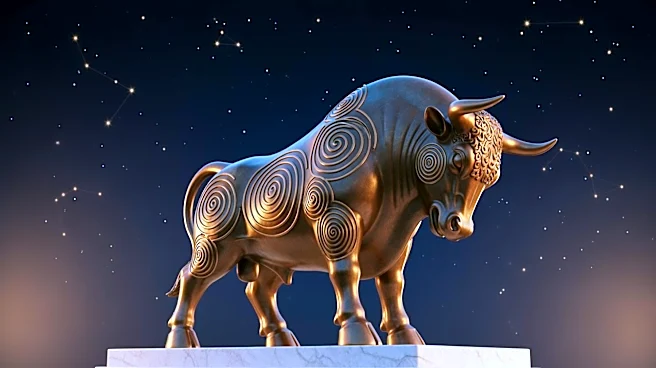





Taurus, the second sign in the zodiac, is rich with symbolism and mythological significance. Represented by the bull, Taurus has been associated with strength, stability, and fertility across various cultures. This article delves into the symbolic meanings and mythological stories tied to Taurus, highlighting its importance in ancient civilizations and its enduring legacy in astrology.
Taurus in Ancient Cultures
The bull has been a powerful symbol in many ancient cultures, and
Taurus is no exception. In Mesopotamian civilization, Taurus was known as "The Great Bull of Heaven," marking the constellation through which the Sun rose during the vernal equinox in the Early Bronze Age. This association with the equinox underscores Taurus's connection to renewal and fertility, as spring is a time of rebirth and growth.
In Hindu tradition, Taurus is equivalent to Vṛṣabha, further emphasizing the bull's significance in agricultural societies. The bull's strength and steadfastness made it a fitting symbol for the stability and reliability that Taurus represents in astrology. These qualities are reflected in the fixed modality of Taurus, which signifies persistence and determination.
Mythological Stories of Taurus
Taurus is steeped in mythological tales that highlight its symbolic attributes. In Greek mythology, Taurus is linked to the story of Zeus and Europa. Zeus transformed into a magnificent white bull to abduct Europa, a Phoenician princess. This tale illustrates the bull's allure and power, characteristics that are often associated with Taurus.
Another Greek myth connects Taurus to Io, a mistress of Zeus. To protect Io from his wife Hera, Zeus transformed her into a heifer, further cementing the bull's role in mythological narratives. These stories reflect the bull's dual nature of strength and vulnerability, traits that are mirrored in the astrological sign of Taurus.
Taurus's Enduring Legacy
The symbolism of Taurus continues to resonate in modern astrology. As an Earth sign, Taurus is associated with practicality, stability, and a connection to the physical world. Its ruling planet, Venus, adds layers of beauty, love, and sensuality to the sign, enhancing its appeal.
Taurus's opposite sign, Scorpio, provides a dynamic balance, highlighting the interplay between stability and transformation. This relationship underscores the complexity and depth of Taurus as a symbol, making it a fascinating subject for astrologers and enthusiasts alike.
In conclusion, Taurus's rich tapestry of symbolism and mythology offers a window into the cultural and astrological significance of this enduring sign. Its stories and attributes continue to captivate and inspire, reflecting the timeless nature of astrology.