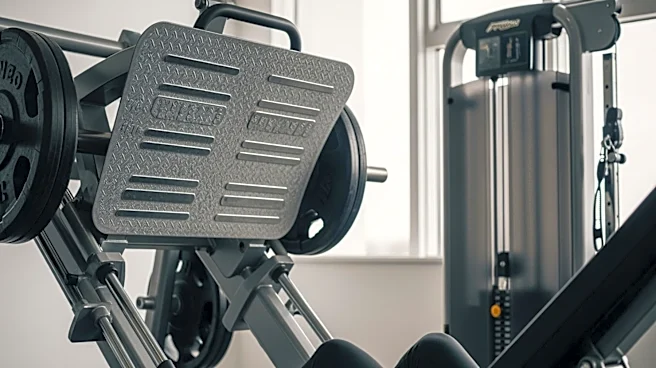


The leg press is a popular weight training exercise that focuses on building lower body strength. It involves pushing a weight or resistance away from the body using the legs. This exercise is performed using a leg press machine, which comes in various forms. The leg press is particularly effective for evaluating and enhancing an athlete's lower body strength, targeting muscles from the gluteus maximus to the lower leg muscles. However, it is crucial
to perform the exercise correctly to avoid potential injuries.
Types of Leg Press Machines
There are two main types of leg press machines: the sled type and the cable type. The sled type, also known as the incline or vertical leg press, involves a sled mounted on rails. The user sits below the sled and pushes it upward with their feet. This type of machine typically includes adjustable safety brackets to prevent the user from being trapped under the weight. On the other hand, the cable type, or seated leg press, is commonly found in multigyms. In this variation, the user sits upright and pushes forward with their feet onto a plate connected to a weight stack by a long steel cable.
Each type of leg press machine offers unique benefits and challenges. The sled type allows for a more natural movement pattern, closely mimicking the squat exercise. Meanwhile, the cable type provides a more controlled environment, making it suitable for beginners or those recovering from injuries. Regardless of the type, proper form and technique are essential to maximize the benefits and minimize the risk of injury.
Muscle Groups Targeted by the Leg Press
The leg press primarily targets the quadriceps, hamstrings, and gluteus maximus. By varying the angle between the sled and the backrest or adjusting the position of the feet on the plate, users can emphasize different muscle groups. For instance, placing the feet higher on the plate targets the glutes and hamstrings more, while a lower foot placement focuses on the quadriceps.
In addition to these primary muscles, the leg press also engages stabilizing muscles, which help maintain balance and control during the exercise. This makes the leg press a comprehensive lower body workout, contributing to overall strength and stability.
Variations of the Leg Press
The leg press can be performed in several variations to target different muscle groups or address specific training goals. One common variation is the one-legged leg press, which helps build stabilizing muscles and corrects strength imbalances between the legs. This variation is often considered more functional, as it replicates movements where one leg is primarily employed, such as in sports or athletic activities.
Another variation is the standing leg press, a one-legged exercise performed with one foot on the floor and the other positioned ahead on a wall. This variation can also be performed using an unfixed sled or cable pulley machine to provide resistance. By incorporating these variations into a workout routine, individuals can achieve a well-rounded lower body strength training program.