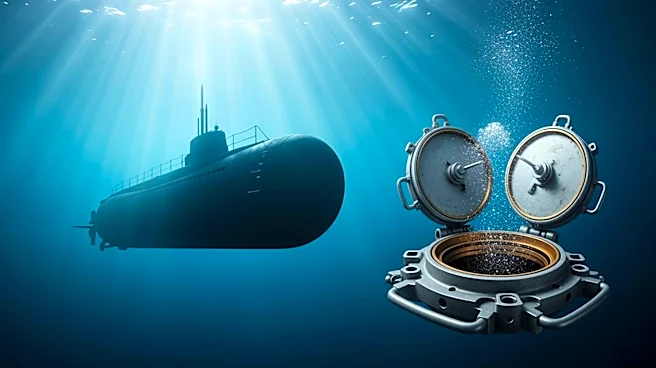





The capture of the German submarine U-110 during World War II marked a significant turning point in the Allied war effort. This Type IXB U-boat, part of Nazi Germany's Kriegsmarine, was seized by the Royal Navy on May 9, 1941. The event, later codenamed "Operation Primrose," provided the Allies with crucial cipher documents, including an Enigma machine, which played a pivotal role in breaking German codes. This article delves into the details of U-110's
capture and its profound impact on the course of the war.
The Design and Capabilities of U-110
U-110 was a Type IXB submarine, slightly larger than the original Type IX models. It had a displacement of 1,051 tonnes when surfaced and 1,178 tonnes when submerged. The submarine measured 76.50 meters in length and was powered by two MAN M 9 V 40/46 supercharged diesel engines, producing a total of 4,400 metric horsepower for surface travel. For submerged operations, it relied on two Siemens-Schuckert electric motors, generating 1,000 metric horsepower. U-110 could reach a maximum surface speed of 18.2 knots and a submerged speed of 7.3 knots.
Equipped with six torpedo tubes and capable of carrying 22 torpedoes, U-110 was a formidable adversary. It also featured a 10.5 cm naval gun and anti-aircraft weaponry. The submarine's design allowed it to operate at depths of up to 230 meters, making it a significant threat to Allied shipping during its operational career.
The Capture and Its Immediate Aftermath
U-110's capture occurred during its second patrol, as it targeted ships of convoy OB 318 near Greenland. After successfully sinking two ships, the submarine was detected by the British corvette HMS Aubrietia using ASDIC sonar. The British destroyers Broadway and Bulldog joined the attack, forcing U-110 to surface. As the crew abandoned ship, the British seized the opportunity to board the submarine.
Sub-Lieutenant David Balme led the boarding party, which retrieved vital documents, including the Kurzsignale code book and an Enigma machine. The capture of these materials was kept secret for several months, with even President Franklin D. Roosevelt only informed in January 1942. The intelligence gained from U-110's capture significantly aided the codebreakers at Bletchley Park in deciphering German communications.
The Long-Term Impact on the War
The capture of U-110 and the subsequent decryption of German codes had a profound impact on the Allied war effort. The intelligence obtained allowed the Allies to anticipate and counter German U-boat operations more effectively, reducing the threat to Allied shipping. This advantage was crucial in maintaining supply lines across the Atlantic, which were vital for the war effort.
The success of Operation Primrose demonstrated the importance of intelligence in modern warfare and highlighted the bravery and skill of the Royal Navy personnel involved. The capture of U-110 remains a testament to the strategic value of codebreaking and the pivotal role it played in the eventual Allied victory in World War II.