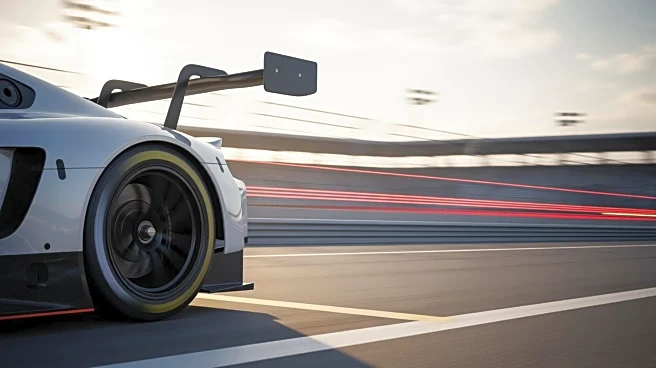


The FIA GT3 European Championship was a sports car racing series that ran from 2006 to 2012. Organized by the Stéphane Ratel Organisation (SRO) and regulated by the Fédération Internationale de l'Automobile (FIA), it was designed to provide a competitive platform for amateur racers using cars closer to production models. Over its lifespan, the championship underwent several changes, reflecting the evolving landscape of motorsports and the needs of its participants.
Origins and Early Years
The FIA GT3 European Championship was launched in 2006 as a derivative of the FIA GT1 World Championship. Its primary aim was to expand manufacturer involvement in motorsports and offer amateur drivers a chance to compete in a more accessible format. The series was unique in its approach, combining multiple one-make series into a larger event, allowing teams to compete both within their manufacturer cup and for the overall race win.
Initially, the championship featured a diverse range of vehicles, with manufacturers providing ready-to-race cars to customers. The series employed performance balancing and handicap weights to ensure competitive parity among different car models. This approach allowed for a wide variety of cars to participate, including models like the Jaguar XKR and Ford Mustang FR500GT.
Changes and Adjustments
As the championship progressed, several adjustments were made to its format and regulations. From 2006 to 2009, teams were limited to a maximum of three cars, each with two drivers. However, starting in 2010, this was reduced to two cars per team, maintaining the two-driver format. This change was part of an effort to streamline the competition and enhance the focus on driver skill.
The series also saw changes in the homologation list, with some cars being added and others dropped due to participation levels. Notable additions included the Audi R8 LMS and Alpina B6, while models like the Jaguar XKR and Ford Mustang were eventually phased out. These adjustments reflected the dynamic nature of the championship and its responsiveness to the evolving motorsport environment.
Legacy and Conclusion
The FIA GT3 European Championship concluded in 2012, leaving behind a legacy of innovation and inclusivity in motorsports. It served as a stepping stone for amateur drivers, providing them with a platform to showcase their skills in a competitive yet accessible environment. The championship's emphasis on performance balancing and equal competition set a precedent for future racing series.
Although the series is no longer active, its influence can be seen in various national and international racing events that continue to embrace the GT3 format. The championship's approach to integrating amateur racers and production-based cars has helped shape the landscape of modern motorsports, ensuring that racing remains an inclusive and diverse sport.