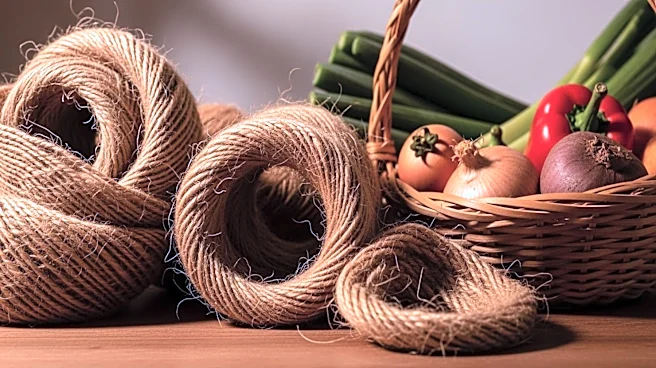







Jute is a natural fiber that has been utilized in a variety of ways, from industrial applications to culinary uses. Known for its strength and biodegradability, jute is primarily grown in Bangladesh and India. This article explores the diverse applications of jute, highlighting its role in manufacturing, packaging, and even in the kitchen.
Industrial and Manufacturing Uses
Jute is widely used in the manufacturing of fabrics such as Hessian cloth, sacking, scrim, carpet backing cloth, and
canvas. Hessian cloth, which is lighter than sacking, is used for bags, wrappers, wall-coverings, upholstery, and home furnishings. Sacking, made from heavy jute fibers, is used for its namesake purpose. Carpet backing cloth made of jute comes in two types: primary and secondary. Primary CBC provides a tufting surface, while secondary CBC is bonded onto the primary backing for an overlay.
Jute's durability and biodegradability make it an environmentally friendly substitute for plastic packaging. It is commonly used to make burlap sacks, which are favored for their strength and sustainability. Jute is also used in the production of ropes and twines, which have been utilized for centuries in various industries, including fishing and construction.
Culinary Uses of Jute
Beyond its industrial applications, jute also has culinary uses, particularly in certain regions of the world. The leaves of the jute plant, specifically from the Corchorus olitorius variety, are used in a mucilaginous potherb called "molokhiya." This dish is popular in Arabic countries such as Egypt, Jordan, and Syria, where it is often served as a soup-based dish with meat over rice or lentils.
In Nigeria, the leaves are used to prepare a sticky soup called ewedu, which is a staple in Yoruba cuisine. The leaves are rubbed until foamy or sticky before being added to the soup, which typically contains meat or fish, onions, pepper, and other spices. In the Philippines, jute leaves, known locally as saluyot, are mixed with other vegetables to create dishes with a slimy texture.
Jute in the Global Market
Jute's versatility extends to its role in the global market. As countries seek to reduce plastic usage, jute products are gaining popularity as sustainable alternatives. Jute bags, for instance, are increasingly used for shopping and packaging, contributing to the reduction of plastic waste.
The global demand for jute is also driven by its use in technical textiles and composites. Jute's strength, durability, and low thermal conductivity make it suitable for high-performance applications, including geotextiles and sound insulation materials. As environmental concerns continue to rise, jute's role as a sustainable material is likely to expand, offering eco-friendly solutions across various industries.