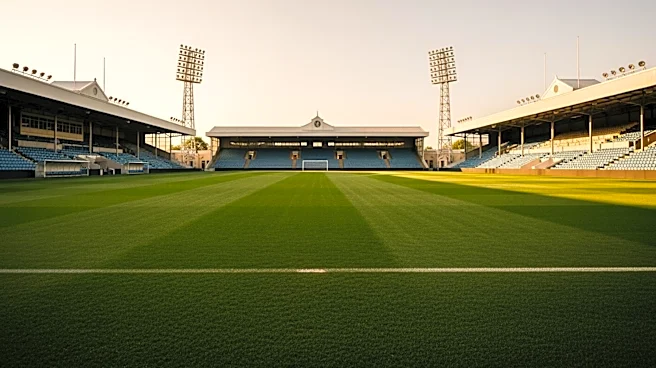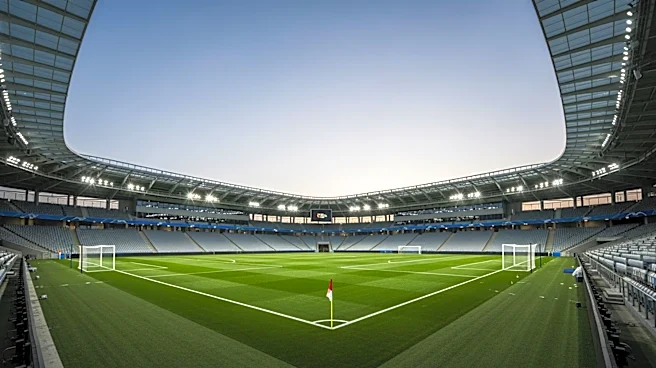








Estadio Cuauhtémoc in Puebla City, Mexico, holds a unique place in football history as one of the few stadiums to host matches in two different FIFA World Cups. This article explores the stadium's involvement in both the 1970 and 1986 tournaments, highlighting its significance and the memorable matches it hosted.
The 1970 FIFA World Cup
In 1970, Estadio Cuauhtémoc was one of five venues selected to host matches for the FIFA World Cup held in Mexico. During this tournament,
the stadium was the site for three group stage matches involving the Uruguay national team. These matches were part of Group B, which also included Italy, Sweden, and Israel.
Uruguay's first match at Estadio Cuauhtémoc was against Israel, resulting in a 2-0 victory for Uruguay. The second match saw Uruguay face Italy, ending in a scoreless draw. The final group stage match at the stadium featured Uruguay against Sweden, where Uruguay lost 1-0. Despite this defeat, Uruguay advanced to the quarterfinals due to a better goal difference.
The 1986 FIFA World Cup
Sixteen years later, Estadio Cuauhtémoc once again played a role in the FIFA World Cup, this time as one of twelve venues. The 1986 tournament saw the stadium host five matches, including two group stage games, a round of 16 match, a quarterfinal, and the third-place playoff.
The group stage matches featured Italy against Argentina, which ended in a 1-1 draw, and Italy versus South Korea, resulting in a 3-2 victory for Italy. In the round of 16, Argentina defeated Uruguay 1-0 at Estadio Cuauhtémoc. The quarterfinal match saw Belgium triumph over Spain in a dramatic penalty shootout. Finally, the stadium hosted the third-place playoff, where France defeated Belgium 4-2 after extra time.
A Legacy of Hosting World-Class Events
Estadio Cuauhtémoc's involvement in both the 1970 and 1986 FIFA World Cups has solidified its reputation as a premier venue for international football. The stadium's ability to host multiple matches in two different tournaments demonstrates its capacity to accommodate large crowds and manage the logistics of major sporting events.
The legacy of these World Cups at Estadio Cuauhtémoc is evident in the stadium's continued use for international competitions and its status as a symbol of Mexico's rich football history. The matches played at the stadium during these tournaments are remembered for their intensity and the high level of competition, contributing to the enduring appeal of Estadio Cuauhtémoc as a venue for world-class football.