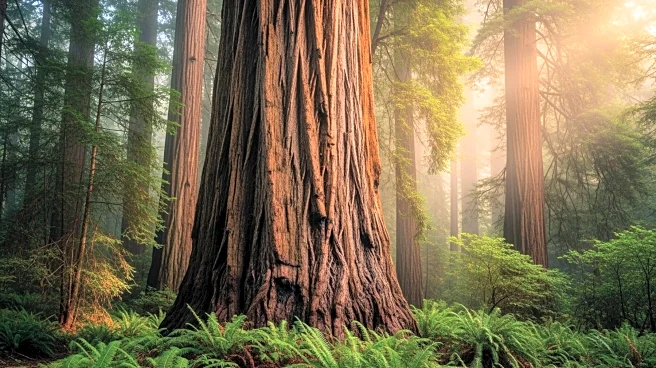

The Redwood National and State Parks in northern California are a testament to the enduring efforts of conservationists to preserve one of the world's most magnificent natural wonders. Established in 1968,
these parks protect the towering coast redwoods and a diverse array of ecosystems. This article explores the historical journey of these parks, from the early days of logging to the concerted efforts to save the remaining forests.
The Early Days of Logging
In the mid-19th century, the discovery of gold in California brought a wave of settlers to the region. While many came seeking fortune, they soon turned their attention to the vast redwood forests that covered the northern California coast. These settlers, unable to find gold, began logging the gigantic trees, sending the timber to San Francisco and other growing cities along the West Coast.
By 1850, the old-growth redwood forests spanned over 2,000,000 acres. However, the relentless logging activities quickly diminished these forests, with nearly 90% of the original redwoods logged by the time conservation efforts began in the 1920s. The scale of logging was immense, and the impact on the landscape was profound, leading to a growing awareness of the need for preservation.
The Birth of Conservation Efforts
The early 20th century marked a turning point in the history of the redwood forests. In the 1920s, the Save the Redwoods League emerged as a key player in the fight to preserve the remaining old-growth redwoods. This organization, along with other conservationists, worked tirelessly to raise awareness and funds to protect these majestic trees.
Their efforts led to the establishment of several state parks, including Del Norte Coast Redwoods State Park, Jedediah Smith Redwoods State Park, and Prairie Creek Redwoods State Park. These parks were crucial in safeguarding the remaining redwood forests and laid the groundwork for the creation of the Redwood National Park in 1968.
The Creation of Redwood National Park
The establishment of Redwood National Park in 1968 was a significant milestone in the history of conservation. This move was a response to the growing recognition of the ecological and cultural importance of the redwood forests. The park was created to protect the remaining old-growth redwoods and their unique ecosystems.
In 1994, the management of Redwood National Park was combined with the three state parks, creating a unified effort to preserve these natural treasures. The parks are now co-managed by the National Park Service and the California Department of Parks and Recreation, ensuring that the redwoods and their habitats are protected for future generations.
Today, the Redwood National and State Parks stand as a symbol of successful conservation efforts. They are a UNESCO World Heritage Site, recognized for their outstanding natural beauty and ecological significance. The history of these parks is a testament to the power of collective action in preserving the natural world.