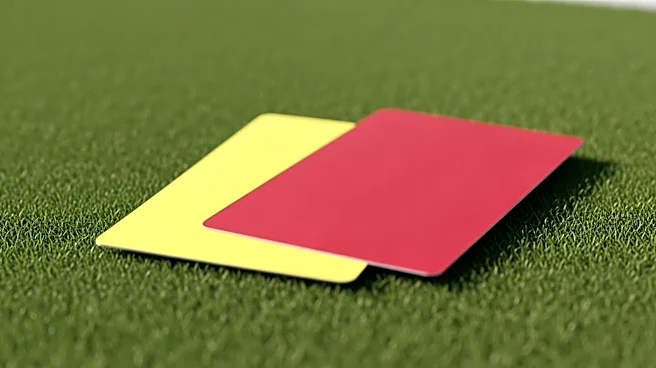









Penalty cards are a fundamental part of association football, providing referees with a clear and effective way to manage player behavior on the field. The introduction of yellow and red cards revolutionized the game, offering a universal language for cautioning and dismissing players. This article explores the history and development of penalty cards in football, highlighting their impact on the sport.
The Birth of Penalty Cards
The concept of penalty cards was introduced to
address the need for a clear and consistent method of communicating disciplinary actions. Before their introduction, referees relied on verbal warnings and gestures, which often led to confusion and disputes. The idea of using colored cards was conceived by British referee Ken Aston, who was inspired by the color-coding system of traffic lights.
Yellow cards indicate a caution, while red cards signify a dismissal. This system was first used in the 1970 FIFA World Cup in Mexico, providing a straightforward way for referees to communicate their decisions to players, coaches, and spectators. The use of penalty cards has since been adopted by many other sports, each adapting the concept to their specific rules and needs.
Implementation and Impact
The introduction of penalty cards had a profound impact on the game, enhancing the referee's ability to manage player conduct and maintain control over the match. Yellow cards serve as a warning to players, allowing them to continue playing but with the understanding that further misconduct could lead to a red card and dismissal.
Red cards, on the other hand, have immediate and significant consequences. A player who receives a red card must leave the field and cannot be replaced, forcing their team to play with one fewer player. This can drastically alter the dynamics of a match, making the management of player behavior crucial for team success.
Evolution and Modern Use
Since their introduction, the use of penalty cards has evolved to address the changing nature of the game. In 1992, the International Football Association Board (IFAB) mandated that a yellow card be shown before a red card for a second bookable offense. This change aimed to provide clarity and consistency in the application of the rules.
With the advent of video assistant referees (VAR), referees now have the ability to review incidents and upgrade a yellow card to a red card if necessary. This technological advancement has further enhanced the accuracy and fairness of officiating, ensuring that decisions are based on a comprehensive review of the evidence.
In conclusion, the evolution of penalty cards in association football has played a crucial role in shaping the modern game. By providing a clear and consistent method for managing player behavior, penalty cards have contributed to the integrity and fairness of the sport, ensuring that the focus remains on skill and sportsmanship.