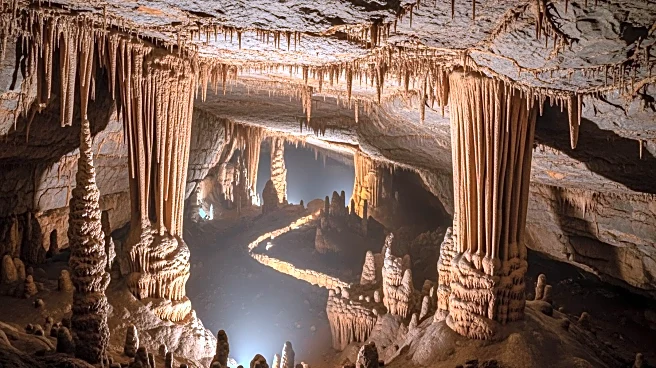




Mammoth Cave National Park, located in south-central Kentucky, is a site rich in history and natural wonder. Known for its extensive cave system, the park has been a focal point of human interest for thousands of years. This article traces the historical journey of Mammoth Cave, from its early exploration by Native Americans to its designation as a national park.
Early Exploration and Native American Presence
Human activity in Mammoth Cave dates back over five thousand years. The cave has yielded
numerous artifacts, including cane torches, gourd fragments, and woven grass moccasin slippers, indicating its use by Native Americans. These early inhabitants explored the cave extensively, leaving behind evidence of their presence and activities.
In the 19th century, several sets of Native American remains were discovered in the cave, providing insights into pre-Columbian funerary practices. One notable find was the remains of "Lost John," a pre-Columbian miner trapped under a boulder. These discoveries have contributed significantly to our understanding of the region's ancient cultures.
The 19th Century and the Rise of Tourism
The 19th century saw Mammoth Cave become a site of commercial interest. The cave's saltpeter reserves were mined during the War of 1812, and it later became a popular tourist attraction. Stephen Bishop, an African-American slave, played a crucial role in mapping the cave and guiding visitors, becoming one of its most celebrated historical figures.
The cave's fame grew, attracting notable visitors and inspiring writers. By the late 1800s, Mammoth Cave was an international sensation, drawing tourists from around the world. This period also saw the beginning of the "Kentucky Cave Wars," a time of intense competition among cave owners for tourist dollars.
Establishment as a National Park
Efforts to establish Mammoth Cave as a national park began in the early 20th century. The Mammoth Cave National Park Association was formed in 1924, and the park was authorized in 1926. The process involved contentious eminent domain proceedings, displacing many local residents.
On July 1, 1941, Mammoth Cave was officially designated a national park. It was later recognized as a World Heritage Site and an International Biosphere Reserve, highlighting its global significance. Today, the park continues to attract visitors with its rich history and natural beauty, offering a glimpse into the past and the wonders of the underground world.