


John Glenn's Friendship 7 mission on February 20, 1962, marked a pivotal moment in the history of American space exploration. As the first American to orbit the Earth, Glenn's flight was a significant achievement in the Space Race against the Soviet Union. This mission not only demonstrated the United States' capabilities in space travel but also made Glenn an instant national hero.
The Preparation and Launch
The preparation for the Friendship 7 mission was meticulous. Glenn
was selected as the prime pilot for the mission, with M. Scott Carpenter as his backup. The spacecraft, named Friendship 7, was part of NASA's Project Mercury, which aimed to send a man into orbit and return him safely. The launch vehicle, an Atlas LV-3B rocket, was carefully prepared and tested to ensure the mission's success.
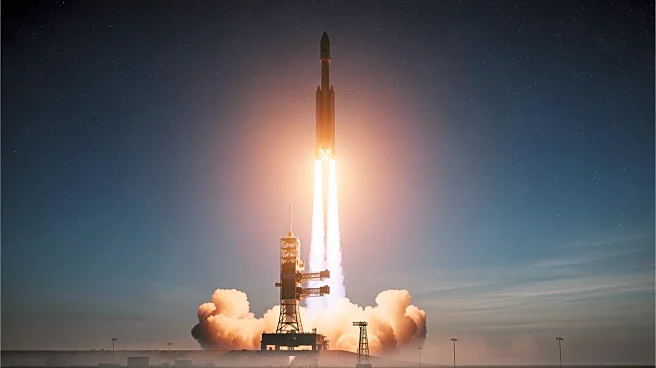
On the day of the launch, Glenn boarded the spacecraft after a series of delays due to technical issues and weather conditions. The launch was finally executed from Cape Canaveral, Florida, with millions watching on television. As the rocket ascended, Glenn experienced the intense vibrations and g-forces typical of space travel. The successful launch was a testament to the rigorous preparation and testing that had gone into the mission.
Orbiting the Earth
Once in orbit, Glenn's mission was to complete three orbits around the Earth. During the flight, he encountered several challenges, including a malfunction in the automatic control system, which required him to manually control the spacecraft. Despite these issues, Glenn successfully maintained the spacecraft's orientation and completed the orbits as planned.
Glenn's observations from space were groundbreaking. He reported seeing a dust storm over Africa and described the beauty of the Earth's horizon from space. His ability to manually control the spacecraft and make observations demonstrated the importance of human presence in space exploration.
Reentry and Recovery
The reentry phase of the mission presented its own set of challenges. A faulty sensor indicated that the heat shield might be loose, which could have led to a catastrophic failure during reentry. To mitigate this risk, the decision was made to keep the retrorocket pack attached to the spacecraft to help secure the heat shield.
Glenn successfully reentered the Earth's atmosphere and splashed down in the Atlantic Ocean, where he was promptly recovered by the USS Noa. The mission's success was celebrated across the nation, and Glenn was hailed as a hero. His flight not only advanced America's position in the Space Race but also inspired a generation to look to the stars.