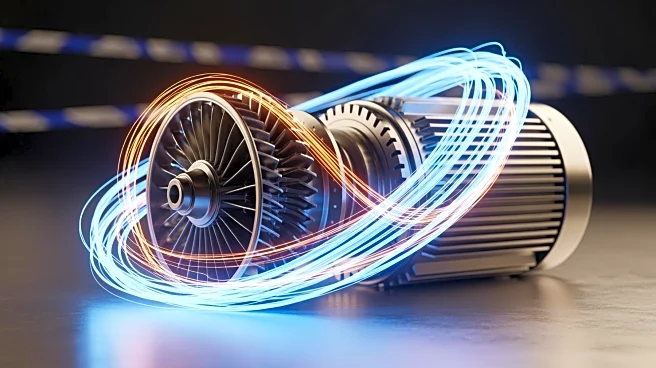




Formula One racing is renowned for its technological innovations, and the Energy Recovery System (ERS) is a prime example of this. Introduced in 2014, the ERS has transformed how energy is utilized in racing, making cars more efficient and powerful. This article explores the key components of the ERS and their roles in enhancing Formula One performance.
The Motor Generator Unit - Kinetic (MGU-K)
The Motor Generator Unit - Kinetic, or MGU-K, is a crucial component of the ERS, responsible for
recovering kinetic energy during braking. When a Formula One car decelerates, the MGU-K captures the kinetic energy that would typically be lost as heat. This energy is then converted into electrical energy and stored in the car's battery.
The stored energy can be deployed to provide a power boost, giving drivers an edge during critical moments in a race. The MGU-K is designed to deliver a continuous power boost of approximately 160 brake horsepower (bhp), significantly enhancing the car's acceleration and overall performance. This component not only improves efficiency but also adds a strategic element to racing, as teams must decide when to deploy the stored energy for maximum impact.
The Motor Generator Unit - Heat (MGU-H)
Complementing the MGU-K is the Motor Generator Unit - Heat, or MGU-H. This component focuses on recovering heat energy from the car's turbocharger. The MGU-H captures the heat generated by the exhaust gases and converts it into electrical energy, which can be used to power the car or stored for later use.
The MGU-H plays a vital role in managing the turbocharger's efficiency, ensuring that it operates optimally throughout the race. By recovering and utilizing heat energy, the MGU-H helps maintain the car's performance while reducing the overall energy consumption. This component is integral to the ERS, as it allows for a more comprehensive recovery of energy, contributing to the car's enhanced performance and efficiency.
The Impact of ERS Components on Racing
The integration of the MGU-K and MGU-H into Formula One cars has revolutionized the sport, making races more strategic and exciting. Teams must carefully manage their energy resources, deciding when to deploy the power boost for maximum advantage. This has added a new layer of complexity to racing, as drivers and teams work together to optimize performance.
Furthermore, the use of ERS components aligns with Formula One's commitment to sustainability. By harnessing energy that would otherwise be wasted, the sport has taken a significant step towards reducing its carbon footprint. The ERS not only enhances the performance of Formula One cars but also sets a standard for innovation and efficiency in motorsports.
In summary, the components of the Energy Recovery System, the MGU-K and MGU-H, are pivotal in transforming Formula One racing. Their ability to recover and utilize energy has made cars more efficient and powerful, while also contributing to the sport's sustainability goals.