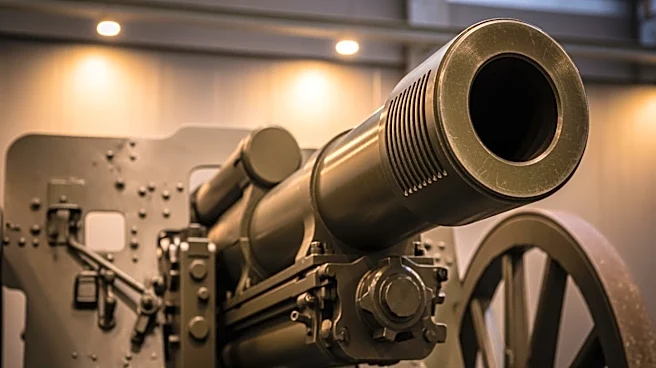






The M65 atomic cannon, affectionately known as "Atomic Annie," stands as a testament to the technological ingenuity of the early Cold War era. This massive artillery piece was not only capable of firing conventional shells but also had the unique ability to launch nuclear projectiles. Its design and engineering reflect a period of intense innovation and military advancement.
Engineering and Design Features
The M65 atomic cannon was a marvel of engineering, designed to meet the specific
demands of nuclear warfare. Weighing over 83 tons and stretching 84 feet in length, the cannon was a formidable presence on the battlefield. Its design was heavily influenced by the German K5 railroad gun, which had been used during World War II. The M65's 280 mm caliber was a significant increase from the standard artillery sizes of the time, allowing it to accommodate the W9 nuclear artillery shell.
Transportation of the M65 required two specially designed tractors, each capable of independent steering. This feature allowed the cannon to navigate tight turns and travel at speeds of up to 35 miles per hour. The ability to quickly set up and dismantle the cannon was another crucial aspect of its design, enabling rapid deployment and repositioning in response to strategic needs.
Firing Capabilities and Range
One of the most remarkable aspects of the M65 atomic cannon was its firing capabilities. The cannon could launch a nuclear shell over a distance of approximately 20 miles, a range that was unprecedented for artillery at the time. The muzzle velocity of 2,500 feet per second ensured that the shell reached its target with precision and speed.
The successful test firing of the M65 at the Nevada Test Site in 1953 demonstrated its capabilities. The test, known as "Grable," involved firing a 15-kiloton nuclear shell over a distance of seven miles. This event marked the first and only time a nuclear shell was fired from a cannon, highlighting the M65's unique place in military history.
Legacy of Innovation
While the M65 atomic cannon was eventually rendered obsolete by advancements in missile technology and more versatile artillery systems, its legacy as a technological innovation endures. The cannon's design and capabilities were a product of their time, reflecting the strategic priorities and technological possibilities of the early Cold War era.
Today, the M65 is remembered as a symbol of military innovation and a reminder of the lengths to which nations went to secure strategic advantages during the Cold War. Its preservation in museums ensures that future generations can appreciate the technological achievements and historical significance of this remarkable artillery piece.