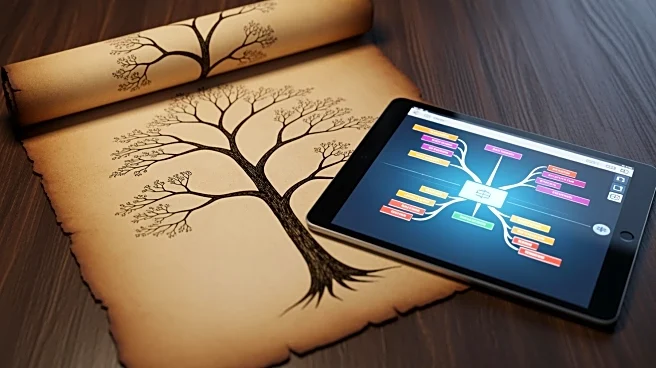




Mind mapping, a popular method for organizing information visually, has a rich history that spans centuries. While the term itself was popularized in the 20th century, the concept of visually mapping information has ancient roots. This article explores the historical development of mind mapping, tracing its evolution from early philosophical diagrams to the sophisticated digital tools we use today.
Early Beginnings and Philosophical Roots
The origins of mind mapping can be traced back to
ancient times when thinkers like Porphyry of Tyros used diagrams to visualize complex ideas. In the 3rd century, Porphyry graphically represented Aristotle's concept categories, laying the groundwork for future visual thinking methods. This early use of diagrams highlights the long-standing human desire to organize and understand information visually.
Another significant figure in the history of mind mapping is Ramon Llull, a philosopher from the 13th century. Llull employed similar techniques to represent knowledge, further demonstrating the enduring appeal of visual organization. These early examples show that the desire to map out ideas visually is not a modern invention but rather a timeless approach to understanding complex information.
The Rise of Modern Mind Mapping
The modern concept of mind mapping was popularized by Tony Buzan, a British author and television personality, in the 1970s. Buzan's approach involved creating radial diagrams with a central concept and branching ideas, a method he introduced through his BBC TV series "Use Your Head." This series, along with his companion book, brought mind mapping into the mainstream, making it accessible to a wider audience.
Buzan's method emphasized the use of keywords, colors, and images to enhance memory and creativity. His approach was particularly appealing to students and professionals looking for innovative ways to organize their thoughts and improve productivity. The popularity of Buzan's mind mapping techniques marked a significant turning point in the evolution of visual thinking.
The Digital Age and Mind Mapping Software
With the advent of digital technology, mind mapping has undergone another transformation. Software tools like ConceptDraw MINDMAP and others have made it easier than ever to create and share mind maps. These digital tools offer features such as dynamic hierarchical structuring, node folding, and integration with other digital resources, enhancing the traditional mind mapping experience.
The digital age has also expanded the applications of mind mapping beyond personal productivity. Today, mind mapping software is used in fields such as project management, education, and knowledge management, demonstrating its versatility and continued relevance. As technology continues to evolve, mind mapping is likely to adapt and find new applications, ensuring its place as a valuable tool for organizing and understanding information.