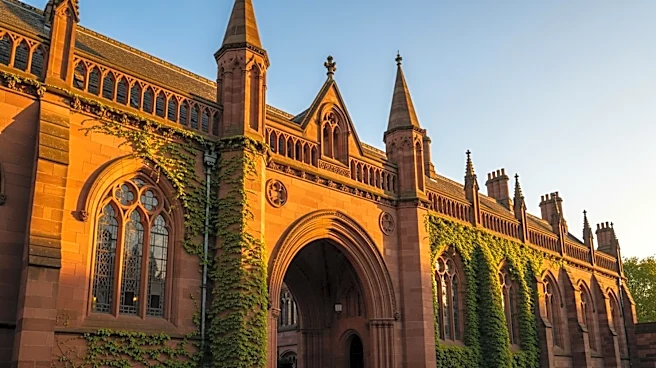






The Smithsonian Institution Building, commonly referred to as the Smithsonian Castle, stands as a testament to architectural ingenuity and historical significance. Located on the National Mall in Washington, D.C., this iconic structure serves as the administrative hub of the Smithsonian Institution. Completed in 1855, the Castle is renowned for its distinctive Norman Revival style, which combines elements of late Romanesque and early Gothic motifs.
This article delves into the architectural features and historical journey of the Smithsonian Castle, highlighting its role in the Smithsonian's legacy.
Architectural Design and Style
The Smithsonian Castle is a masterpiece of Norman Revival architecture, a style that recalls the 12th-century combination of late Romanesque and early Gothic motifs. Designed by architect James Renwick Jr., the building is constructed from Seneca red sandstone, sourced from the Seneca Quarry in Montgomery County, Maryland. This choice of material was both economical and aesthetically pleasing, as the redstone was less expensive than granite or marble and hardened satisfactorily upon exposure to the elements.
Renwick's design was selected through a nationwide competition held in 1846, and his Gothic Revival style was intended to evoke the Collegiate Gothic of England, symbolizing knowledge and wisdom. The Castle's façade features intricate sculptural flora, although the final work utilized conventional pattern-book designs. The building comprises a central section, two extensions or ranges, and two wings, with towers that serve both decorative and functional purposes.
Historical Journey and Renovations
The construction of the Smithsonian Castle began in 1847, with the East Wing completed in 1849 and occupied by Secretary Joseph Henry and his family. The West Wing followed later that year. Despite a structural collapse in 1850, which led to changes in construction methods, the Castle's exterior was completed in 1852, and the interior work finished in 1855. Over the years, the Castle has undergone several renovations, including fireproofing work after a devastating fire in 1865 and the addition of electric lighting in 1895.
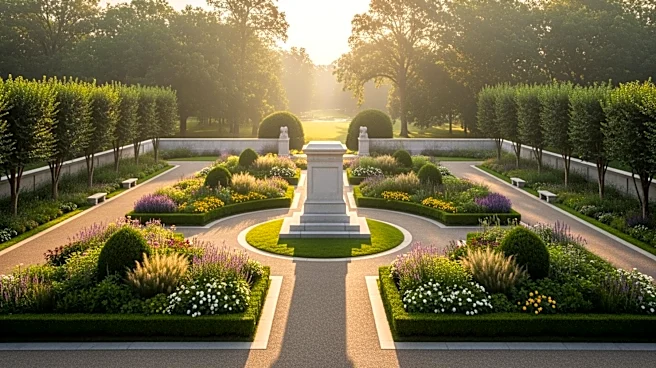
In the 20th century, the Castle saw further renovations, including the replacement of the Great Hall's wooden floor with terrazzo and the installation of modern electrical systems, elevators, and HVAC systems. The Enid A. Haupt Garden was dedicated in 1987, enhancing the Castle's surroundings with a picturesque landscape.
The Castle's Role in the Smithsonian Institution
Today, the Smithsonian Castle houses the administrative offices of the Smithsonian Institution and serves as the main visitor center. It features interactive displays and maps, providing visitors with a comprehensive overview of the Smithsonian's offerings. A crypt inside the north entrance holds the tomb of James Smithson, the institution's founding donor.
The Castle's design allows for expansion, reflecting its informal medieval-inspired architecture that accommodates asymmetrical development. As the focal point of the National Mall, the Smithsonian Castle continues to embody the institution's mission of increasing and diffusing knowledge, serving as a symbol of the Smithsonian's enduring legacy.