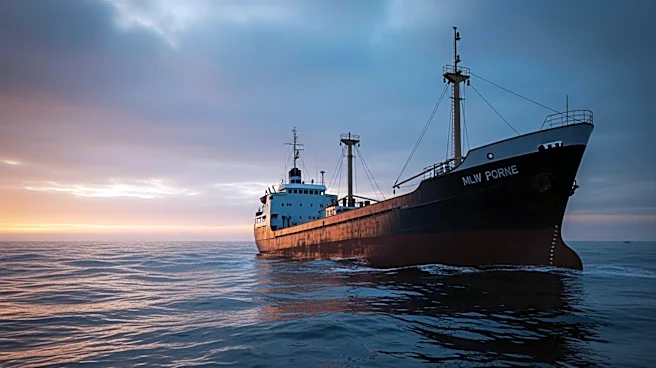






The SS Robin Moor, an American cargo steamship, became a symbol of the vulnerability faced by neutral ships during wartime when it was sunk by a German U-boat in May 1941. This incident, occurring months before the United States entered World War II, highlighted the risks associated with maritime travel in conflict zones and underscored the challenges of maintaining neutrality in a world at war.
The Sinking
The Robin Moor was on a journey from New York to Mozambique,
carrying a varied cargo that included automobiles, steel rails, and agricultural chemicals. Despite its neutral status, the ship was intercepted by the German submarine U-69 in the tropical Atlantic. The U-boat crew allowed the passengers and crew to abandon ship before launching a torpedo that struck the Robin Moor amidships. The ship sank slowly, prompting U-69 to surface and fire additional rounds to ensure its destruction.
The sinking of the Robin Moor was significant for the absence of loss of life, as the U-boat crew provided provisions to the lifeboats and promised to radio their position. However, the act of sinking a neutral ship in an area previously considered safe from U-boat attacks caused a political stir in the United States and raised questions about the safety of maritime travel during wartime.
Political and Social Impact
The attack on the Robin Moor led to a political incident in the United States, challenging isolationist sentiments and highlighting the aggressive actions of Germany. President Franklin D. Roosevelt responded to the sinking with strong words, emphasizing the brutality of casting lifeboats adrift in mid-ocean. The incident was seen as a warning to the United States about the Nazi movement's intentions and the threat to free navigation on the high seas.
In Congress, opinions varied on the appropriate response to the sinking. Some politicians downplayed the incident, while others called for more aggressive measures, such as arming merchant vessels or convoying with battleships. The sinking of the Robin Moor contributed to the growing tension between the United States and Germany, setting the stage for America's eventual entry into World War II.
Legacy
The Robin Moor incident served as a catalyst for change in U.S. maritime policy, influencing the nation's approach to naval warfare and its eventual involvement in World War II. As tensions continued to rise, the sinking of the Robin Moor remained a poignant reminder of the dangers faced by ships navigating the treacherous waters of a world at war.
The vulnerability of neutral ships during wartime, as exemplified by the Robin Moor, underscored the need for increased protection and strategic planning. The incident highlighted the challenges of maintaining neutrality in a global conflict and the importance of safeguarding maritime travel in times of war.