



Gestalt psychology, with its focus on holistic perception, has significantly influenced modern design practices. The principles of Gestalt psychology provide designers with a framework for creating visually appealing and easily interpretable layouts. By understanding how humans naturally organize sensory information, designers can craft experiences that align with our perceptual tendencies.
Applying Gestalt Principles in Design
One of the key contributions of Gestalt psychology to design
is the application of its principles of perceptual organization. The law of proximity, for instance, is used to group related elements together, making it easier for users to understand the relationship between different parts of a design. This principle is often applied in user interface design, where buttons and controls that perform similar functions are placed close to each other.
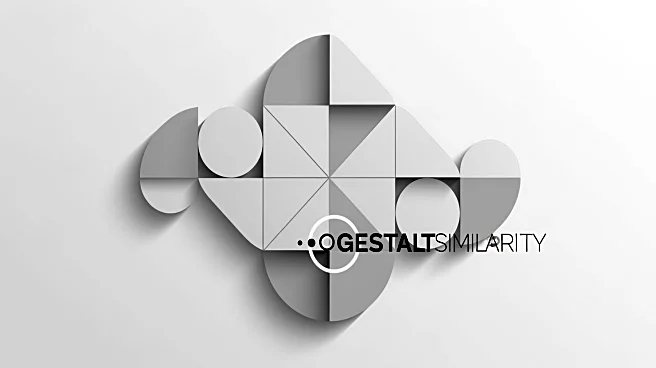
The law of similarity is another principle frequently used in design. By using similar colors, shapes, or sizes, designers can create a sense of unity and coherence within a layout. This principle helps users quickly identify related elements, enhancing the overall usability of a design.
Enhancing User Experience
Gestalt psychology also emphasizes the importance of closure and continuity in design. The law of closure suggests that users will perceive incomplete shapes as complete, allowing designers to create minimalist designs that still convey the intended message. This principle is often used in logo design, where simple shapes and lines are used to create recognizable symbols.
The law of continuity is applied to guide users' attention through a design. By aligning elements along a path or curve, designers can create a visual flow that leads users through the content. This principle is particularly useful in web design, where it helps users navigate complex information structures.
Creating Meaningful Visuals
In addition to organizing elements, Gestalt principles help designers create meaningful visuals that resonate with users. The concept of figure-ground organization, for example, is used to distinguish important elements from the background, ensuring that key information stands out. This principle is crucial in creating clear and effective visual hierarchies.
By leveraging the principles of Gestalt psychology, designers can create experiences that are not only aesthetically pleasing but also intuitive and user-friendly. The impact of Gestalt psychology on modern design is evident in the way designers approach layout, composition, and visual communication, making it an essential tool in the designer's toolkit.