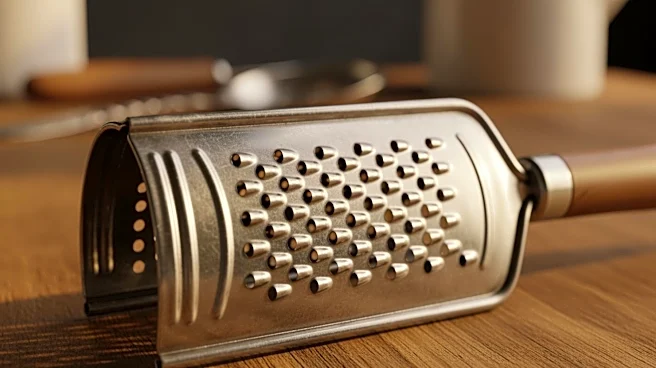

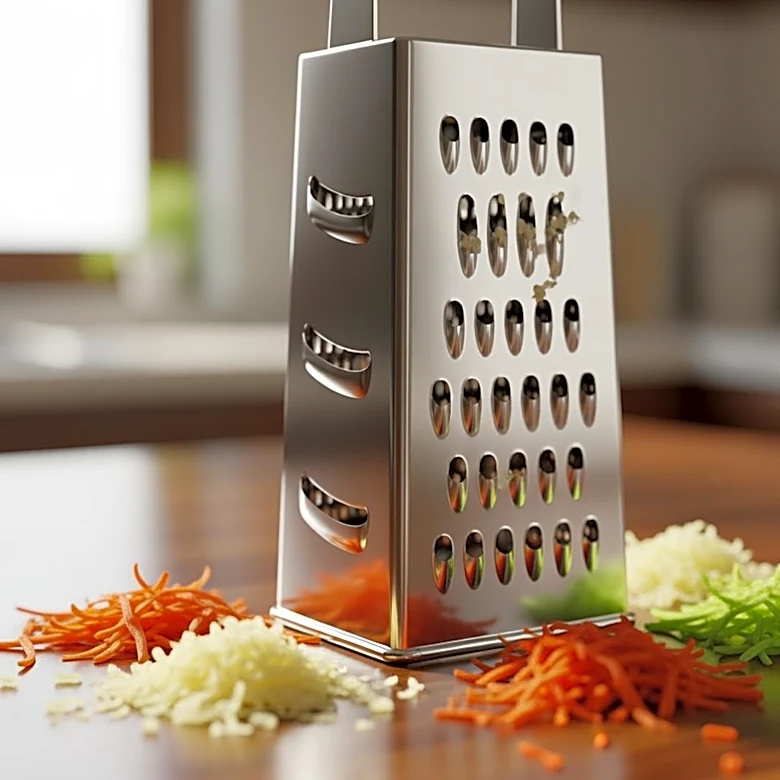






The grater, a staple in modern kitchens, has a rich history that dates back to ancient times. Originally crafted from bronze and silver alloys, graters have evolved significantly over the centuries. From their early use in ancient Greece and Etruscan Italy to their current status as a kitchen essential, graters have undergone numerous transformations in design and purpose.
Ancient Origins
The earliest known graters were discovered in burial sites in Greece and Etruscan
Italy, dating back to the early first millennium BCE. These ancient tools were made from bronze and silver alloys, indicating their value and importance in culinary practices of the time. According to historical texts like Homer's Iliad, graters were used to grate goat's cheese, a key ingredient in the preparation of Kykeon, a traditional drink.
The use of graters in ancient times highlights their significance in food preparation, even in early civilizations. The ability to transform hard cheeses into finer, more edible forms was a valuable skill, and graters played a crucial role in this process.
Evolution of Design
The design of graters has evolved considerably since their ancient origins. One of the earliest depictions of a grater resembling modern designs appeared in Bartolomeo Scappi's work, Opera dell'arte del cucinare, published in 1570. However, the first modern cheese grater is often attributed to François Boullier in 1540s France. Boullier's design, made from pewter, was intended to make hard cheeses more palatable.
Over time, graters have been crafted from various materials, including metal and plastic, to improve durability and functionality. The introduction of different grating surfaces, such as those found on box graters, has expanded their versatility, allowing for a range of textures and sizes in grated foods.
Modern-Day Graters
Today, graters are an essential tool in kitchens worldwide, available in numerous styles to suit different culinary needs. The box grater remains a popular choice, offering multiple grating surfaces for various tasks. Microplane graters, with their fine, sharp blades, are ideal for zesting and grating hard spices, while rotary drum graters provide mechanical leverage for grating harder foods like nuts.
The evolution of the grater reflects changes in culinary practices and the increasing demand for versatile kitchen tools. As cooking techniques continue to evolve, graters remain a vital component in the preparation of diverse dishes, showcasing their enduring relevance and adaptability in the culinary world.