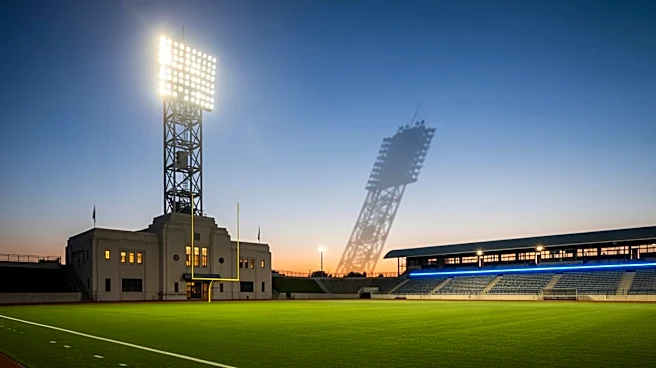








The Cotton Bowl Stadium, located in Dallas, Texas, has a rich history that dates back to its opening in 1930. Known for hosting a variety of significant sporting events, the stadium has undergone numerous changes and renovations over the decades. This article delves into the historical evolution of the Cotton Bowl Stadium, highlighting its key milestones and transformations.
Early Years and Construction
The Cotton Bowl Stadium was originally known as Fair Park Stadium when it
opened in 1930. It was constructed on the site of a previous wooden football stadium, also named Fair Park Stadium. The initial construction cost was $328,000, and the stadium could accommodate 45,507 spectators. The first game played in the stadium was between local high schools in October 1930, marking the beginning of its long-standing association with football.
In 1936, the stadium was officially renamed the Cotton Bowl, a name that would become synonymous with college football. The stadium's capacity was expanded in the late 1940s, with a second deck added to the west side in 1948 and the east side in 1949, increasing the seating capacity to 75,504. These expansions were driven by the popularity of SMU halfback Doak Walker, leading to the stadium's nickname, "The House That Doak Built."
Renovations and Modernization
Over the years, the Cotton Bowl Stadium has seen several renovations to modernize its facilities and increase its capacity. In 1968, chair-back seats were installed, reducing the capacity to 72,032. The stadium transitioned to an AstroTurf surface in 1970, which remained until 1993 when natural grass was reinstalled in preparation for the 1994 FIFA World Cup.
The most significant renovation occurred in the 2000s, with a $57 million upgrade that included expanding the seating capacity to 92,100. This renovation involved encircling the second deck, adding new media and VIP facilities, and updating restrooms, concession areas, lighting, and sound systems. These improvements were part of an effort to maintain the stadium's relevance and appeal for major events.
Legacy and Cultural Impact
The Cotton Bowl Stadium has played a pivotal role in the cultural and sporting landscape of Dallas. It has hosted numerous iconic events, including the annual Red River Rivalry between the University of Texas and the University of Oklahoma, as well as the Cotton Bowl Classic, a staple of college football.
The stadium's legacy extends beyond sports, having hosted major concerts and events that have drawn large crowds. Its historical significance and continued use for high-profile events underscore its enduring impact on the community and its place in the history of American sports venues.