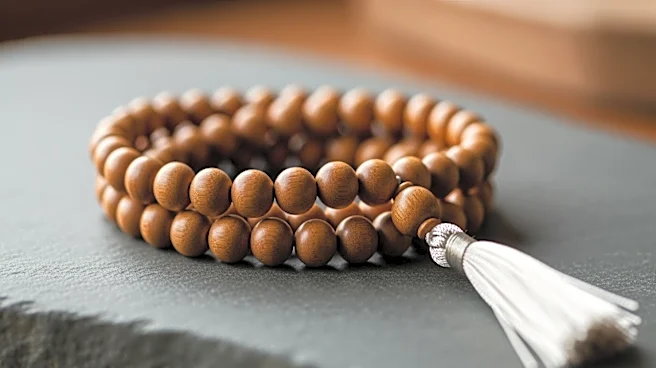





Mala beads, or japamala, are not only spiritual tools but also objects of intricate craftsmanship. Used in Hinduism, Buddhism, Jainism, and Sikhism, these beads are traditionally made from a variety of materials, each chosen for its unique properties and spiritual significance. The craftsmanship involved in creating mala beads reflects the cultural and religious values of the communities that use them.
Traditional Materials and Their Significance
Mala beads have historically been made from natural
materials such as wood, stone, gems, seeds, bone, and precious metals. Each material is selected for its spiritual properties and its ability to enhance the practitioner's connection to the divine. For example, rudraksha beads are considered sacred by Saivas, devotees of Shiva, and are believed to have protective and healing qualities. Tulsi wood beads are revered by Vaishnavas, followers of Vishnu, and are thought to bring spiritual purity.
In addition to their spiritual significance, the materials used for mala beads often reflect the cultural values of the communities that use them. Precious metals and gemstones are favored for their beauty and durability, while natural fibers like cotton, silk, or animal hair are used to string the beads together. These choices reflect a balance between aesthetic appeal and spiritual function.
Modern Materials and Techniques
In the modern era, mala beads are made from a wider range of materials, including synthetic options like plastic and glass. These materials offer a more affordable alternative to traditional options, making mala beads accessible to a broader audience. Nylon cords are favored for their low cost and good wear resistance, while elastic cords allow malas to be worn on the wrist without slipping off.
Despite the introduction of synthetic materials, traditional craftsmanship remains an important aspect of mala bead production. Skilled artisans continue to create malas using simple tools and machinery, ensuring that each bead is carefully shaped and drilled. This attention to detail reflects the cultural and spiritual significance of mala beads as objects of devotion.
Craftsmanship and Cultural Identity
The craftsmanship involved in creating mala beads is a reflection of the cultural identity of the communities that use them. Each mala is a unique expression of the artisan's skill and the spiritual values of the community. Whether made from traditional or modern materials, mala beads serve as a tangible connection to ancient traditions and spiritual practices.
As symbols of religious identification, mala beads are worn by practitioners as a representation of their faith and devotion. The craftsmanship involved in creating these beads ensures that they remain a meaningful and enduring part of spiritual practice across cultures and generations.