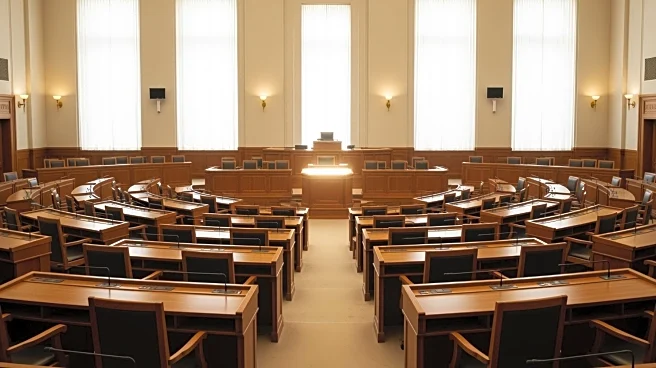

The United States House of Representatives, as the lower chamber of Congress, holds distinct roles and powers that are crucial to the functioning of the federal government. This article delves into the specific
responsibilities and authorities of the House, highlighting its unique contributions to American governance.
Legislative Authority
The House of Representatives, alongside the Senate, has the authority to pass federal legislation. Under Article One of the U.S. Constitution, both chambers must approve a bill for it to be sent to the president for signature or veto. The House holds exclusive powers, such as initiating all revenue bills, which underscores its significant role in fiscal matters.
Additionally, the House has the power to impeach federal officers, a responsibility that has been exercised in notable cases throughout history. The House can also elect the president if no candidate receives a majority of votes in the Electoral College, further emphasizing its influence in the political landscape.
Membership and Representation
The House is composed of representatives elected to serve two-year terms, with each seat up for election before the start of the next Congress. The composition of the House is determined by the Uniform Congressional District Act, which allocates seats based on population as measured by the census. This ensures that representation is proportional to the population of each state.
Since 1913, the number of voting representatives has been capped at 435, with temporary increases following the admissions of Alaska and Hawaii. The House also includes non-voting delegates from the District of Columbia and U.S. territories, reflecting its commitment to representing diverse regions.
Checks and Balances
The House of Representatives plays a vital role in the system of checks and balances within the federal government. While the Senate holds the power to approve treaties and confirm Cabinet members, the House's ability to initiate revenue bills and impeach officials provides a counterbalance to the Senate's authority.
The House's power to elect the president in certain circumstances further highlights its importance in the electoral process. This function has been exercised twice in U.S. history, demonstrating the House's ability to influence the executive branch.
Overall, the United States House of Representatives is a key component of the federal government, with distinct roles and powers that contribute to the legislative process and the system of checks and balances. Its responsibilities in initiating revenue bills, impeaching officials, and representing the population ensure that it remains a vital institution in American governance.