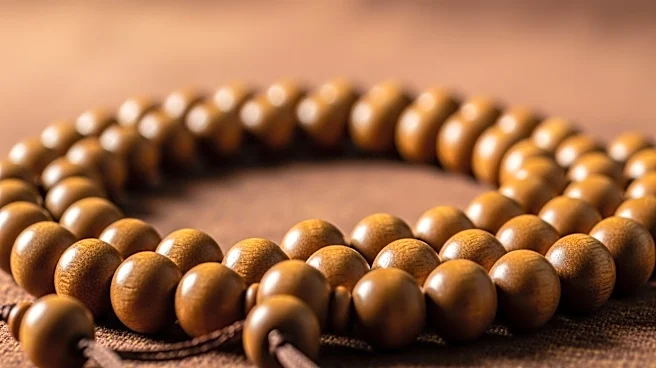

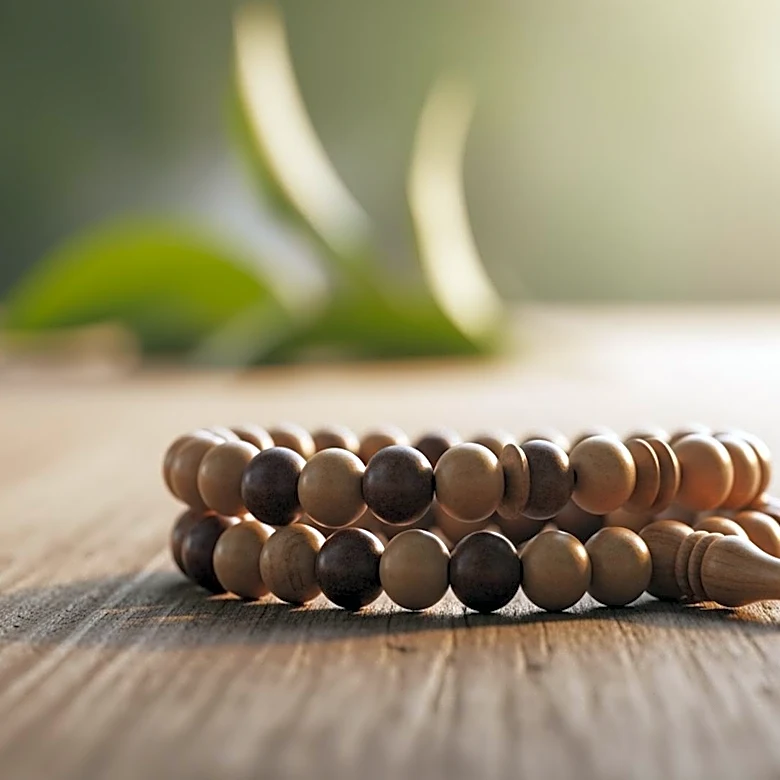


Mala beads, often referred to as japamala, are more than just tools for counting prayers; they hold deep cultural and spiritual significance in various Indian religions. Used predominantly in Hinduism, Buddhism, Jainism, and Sikhism, these beads serve as a physical representation of devotion and spiritual practice. Typically consisting of 108 beads, mala beads are used to count recitations of mantras, prayers, or other sacred phrases, and are also
worn to ward off evil and symbolize religious identification.
Spiritual Practices and Symbolism
Mala beads are integral to spiritual practices such as japa, which involves the repetition of mantras. This practice is believed to help focus the mind and deepen one's spiritual connection. The beads themselves are often made from materials that hold specific religious significance, such as wood, stone, gems, seeds, bone, and precious metals. Each material is chosen for its unique properties and its ability to enhance the spiritual experience. For instance, rudraksha beads are considered sacred by Saivas, devotees of Shiva, while tulsi wood beads are revered by Vaishnavas, followers of Vishnu.
The number 108 is significant in many Indian religious traditions, symbolizing various spiritual concepts. In Buddhism, it represents the 108 afflictions or kleshas, while in Hinduism, it is associated with the 108 names of deities. The 109th bead, often called the guru bead, is not counted during recitations and serves as a reminder of the spiritual teacher or guide.
Historical Development and Usage
The use of mala beads can be traced back to ancient India, although their exact origin is unknown. They are depicted in early Hindu art and have been used by various religious communities for centuries. The practice of using beads for counting prayers spread to China with the introduction of Buddhism during the Han dynasty. Over time, mala beads became associated with both monastic and lay practices, serving as a common piece of religious equipment.
In China, malas were initially used primarily by monks, but by the Ming dynasty, they had become fashionable accessories among the Chinese court. Sumptuary laws regulated the materials used for malas, reflecting their status as symbols of wealth and spirituality. Despite their aesthetic appeal, the spiritual significance of mala beads remains central to their use in religious practices.
Modern Adaptations and Materials
Today, mala beads are made from a variety of materials, including synthetic options like plastic and glass. While traditional materials are still favored for their spiritual properties, modern malas offer a wider range of choices for practitioners. The strings used to hold the beads together can be made from natural fibers like cotton, silk, or animal hair, or from synthetic materials like nylon.
Mala beads continue to be used in spiritual practices across the world, serving as a tangible connection to ancient traditions. Whether worn as a necklace or wrapped around the wrist, they are a constant reminder of one's spiritual journey and commitment to personal growth.