






The good-morning exercise is a weight training movement that targets the lower back, hamstrings, and gluteus maximus. Known for its unique name, which reflects the bowing motion similar to a morning greeting in some cultures, this exercise is a staple in strength training routines. It is particularly valued for its ability to enhance lower back strength and improve overall stability.
Mechanics of the Good-Morning Exercise
The good-morning exercise involves a specific movement pattern that
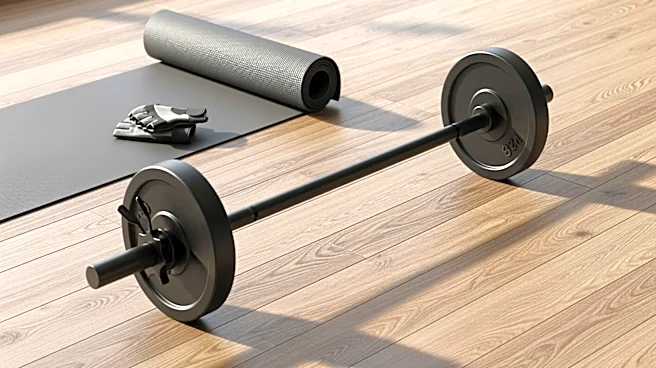
engages multiple muscle groups. The exercise begins with a barbell placed on the shoulders, similar to a back squat. The lifter then bends forward at the hips while maintaining a straight back, which is crucial to avoid injury. This forward bend is the eccentric portion of the exercise, where the lifter's torso moves towards a parallel position with the ground. The concentric portion follows as the lifter returns to the upright position.
The exercise primarily targets the erector spinae muscles of the lower back, which work isometrically to keep the spine extended. The hamstrings and gluteus maximus are also heavily involved, working isotonically to perform hip extension. The degree of knee bend can alter the focus of the exercise; straighter knees increase the stretch and stress on the hamstrings, while bent knees allow for a greater range of motion in the hips.
Benefits and Applications
The good-morning exercise is integral to various strength training methodologies, including the Westside Barbell method. It is often trained to near maximum effort to develop strength that aids in recovering from a poor squat position, thereby reducing injury risk. Additionally, it is a key exercise in the conjugate method, which is used to enhance deadlift performance.
In Olympic weightlifting, the good-morning is used to train the second phase of the clean or snatch pull. This variation involves descending, reversing direction, and accelerating the ascent, mimicking the rapid hip extension seen in the clean and jerk or snatch. This makes the good-morning an effective assistance exercise for weightlifters.
Safety Considerations
While the good-morning exercise is beneficial, it is also controversial due to the potential risk of lower back injuries. Proper form is essential to prevent rounding of the back, which can lead to injury. Lifters are advised to keep their chin up and focus on a spot at belt height to maintain a flat or slightly arched spine. Despite its risks, when performed correctly, the good-morning can strengthen the lower back and prevent injuries, making it a valuable addition to a well-rounded strength training program.