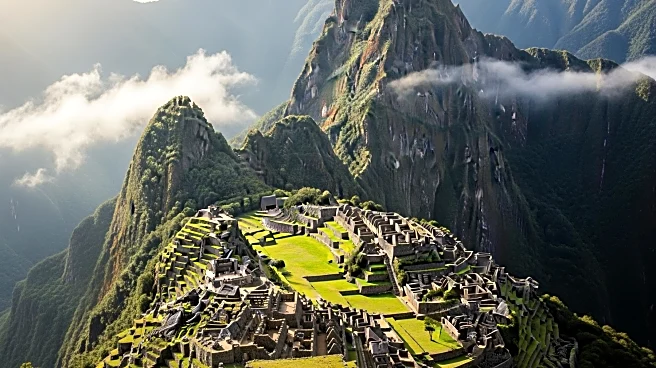

Machu Picchu is not only an archaeological wonder but also a geographic marvel. Situated in the Eastern Cordillera of southern Peru, this 15th-century Inca citadel is perched on a mountain ridge at 2,430
meters (7,970 ft) above sea level. Its unique location and surrounding environment contribute to its significance as a cultural and natural UNESCO World Heritage Site.
Geographic Features and Location
Machu Picchu is located in the Machupicchu District of Urubamba Province, about 80 kilometers (50 miles) northwest of Cusco. The site is situated above the Sacred Valley and along the Urubamba River, which forms a deep canyon with a subtropical mountain climate. The citadel is nestled between two mountain peaks, Machu Picchu and Huayna Picchu, offering breathtaking views of the surrounding landscape.
The site's elevation provides a milder climate compared to the Inca capital of Cusco, which is over 1,000 meters (3,300 ft) higher. This geographic advantage made Machu Picchu an ideal location for a royal retreat. The area is subject to morning mists rising from the river, adding to its mystical allure.
Environmental Significance and Biodiversity
The Historic Sanctuary of Machu Picchu encompasses a protected area covering over 35,000 hectares. This sanctuary includes diverse ecosystems ranging from montane wet forests to snow-capped peaks. The rugged geography supports habitats ideal for wildlife, including 75 mammal species, 444 bird species, and 377 butterflies. Notable species include the Andean fox, spectacled bear, and white-tailed deer.
The sanctuary is also home to over 550 tree species, including ferns, gymnosperms, and palms. The area's rich biodiversity is a testament to its environmental significance and the need for conservation efforts. The sanctuary's designation as a UNESCO World Heritage Site highlights its importance as a natural and cultural treasure.
Conservation Challenges and Efforts
Despite its environmental significance, Machu Picchu faces challenges related to preservation and sustainability. The influx of tourists has raised concerns about the impact on the ecosystem and the site's cultural heritage. The Peruvian government has implemented measures to manage tourism, including limiting the number of daily visitors and introducing stricter entrance regulations.
Conservation efforts focus on protecting the site's biodiversity and maintaining its ecological balance. These initiatives aim to preserve the natural beauty of Machu Picchu while allowing visitors to experience its geographic marvel. The balance between tourism and conservation remains a critical focus for stakeholders.
In summary, Machu Picchu's geographic features and environmental significance contribute to its status as a global icon. Its unique location and rich biodiversity make it a must-visit destination for those seeking to explore the wonders of nature and history.