



Gels are fascinating substances that exhibit properties of both liquids and solids. They are formed through a process called gelation, which involves the creation of a three-dimensional network within a liquid medium. This network gives gels their unique semi-solid behavior, making them useful in a variety of applications. Understanding the science behind gel formation can provide insights into their diverse uses and characteristics.
The Structure of Gels
Gels are primarily
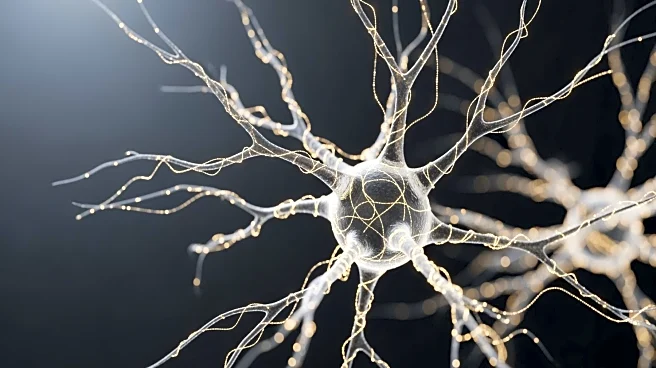
composed of a liquid phase that is ensnared within a solid network. This network can be formed through physical or chemical bonds, such as polymer chain entanglements or disulfide bonds. The cross-linking within the fluid is what gives a gel its structure and contributes to its adhesive properties. Despite being mostly liquid by mass, gels behave like solids due to this intricate network.
The density of gels is similar to that of their constituent liquids, which is why they can exhibit a range of properties from soft and weak to hard and tough. The process of gelation involves the assembly of particles into a space-spanning network, leading to a phase arrest. As the gel ages, the particles rearrange to form thicker strands, increasing the material's elasticity.
Types of Gels
There are several types of gels, each with distinct characteristics and applications. Colloidal gels consist of a network of particles in a fluid medium, providing mechanical properties and elastic behavior. Hydrogels, on the other hand, are networks of hydrophilic polymer chains that can contain over 90% water, making them highly absorbent and flexible.
Organogels are non-crystalline, thermoreversible solids composed of a liquid organic phase entrapped in a cross-linked network. These gels are used in pharmaceuticals, cosmetics, and food. Xerogels are formed by drying a gel with unhindered shrinkage, retaining high porosity and surface area. Nanocomposite hydrogels incorporate nanoparticles to mimic native tissue properties, offering superior physical and chemical properties.
Applications and Properties
Gels have a wide range of applications due to their unique properties. They are used in fiber optic communications to prevent water intrusion and buffer fibers against mechanical damage. In the food industry, gels are used as thickeners and gelling agents. Their thixotropic nature allows them to become fluid when agitated and resolidify when resting.
The thermodynamics of gel deformation involves the mixture of a polymer network and a solvent phase. Gels demonstrate elasticity like rubber, and their volume can change significantly under deformation. This property is utilized in various applications, from drug release matrices to synthetic tissue models.