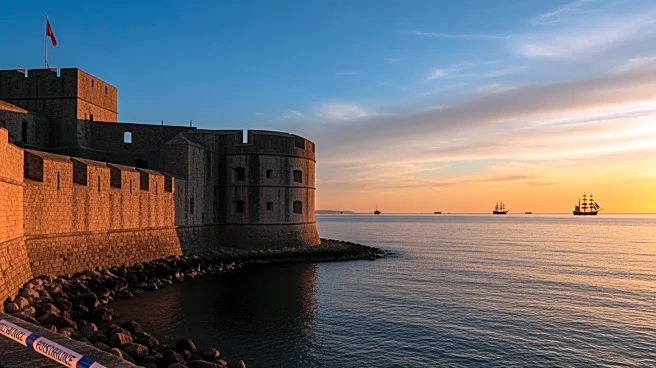

Cartagena, Colombia, played a crucial role in the War of Jenkins' Ear, a conflict between Spain and Great Britain that took place from 1739 to 1748. The city's strategic location and formidable defenses
made it a key target for British forces seeking to expand their influence in the Caribbean. This article delves into Cartagena's involvement in the war, focusing on the British siege of 1741 and its implications for the Spanish Empire.
Strategic Importance of Cartagena
Cartagena's strategic importance during the War of Jenkins' Ear cannot be overstated. As a major port on the Caribbean coast, the city was a vital link in the Spanish colonial network, facilitating trade and the movement of goods between Spain and its American territories. Its well-fortified harbor served as a safe haven for the Spanish fleet, which transported immense revenues of gold and silver from New Granada and Peru to Spain.
The city's defenses, including its colonial walled city and fortress, were among the most formidable in the Americas. These fortifications were designed to protect Cartagena from pirate attacks and foreign invasions, making it a key stronghold for the Spanish Empire in the Caribbean.
The British Siege of 1741
In 1741, during the War of Jenkins' Ear, British forces launched a major assault on Cartagena in an attempt to capture the city and weaken Spanish control in the region. The British armada, commanded by Admiral Edward Vernon, included 50 warships, 130 transport ships, and over 25,000 men, making it one of the largest naval forces ever assembled.
Despite the overwhelming size of the British fleet, Cartagena's defenses held strong. The Spanish forces, led by Governor Sebastián de Eslava and Admiral Blas de Lezo, successfully repelled the British assault. The failed siege resulted in significant British casualties, with thousands of soldiers succumbing to disease and combat.
Implications for the Spanish Empire
The successful defense of Cartagena during the British siege of 1741 had far-reaching implications for the Spanish Empire. It demonstrated Spain's ability to defend its colonial possessions and maintain control over key territories in the Caribbean. The victory at Cartagena also bolstered Spanish morale and reinforced the strategic importance of the city within the empire.
Cartagena's role in the War of Jenkins' Ear highlights its significance as a military and economic stronghold for the Spanish Empire. The city's successful defense against British forces remains a testament to its strategic importance and the resilience of its defenders. Today, Cartagena's rich history and well-preserved fortifications continue to attract visitors, offering a glimpse into its storied past and its role in shaping the history of the Americas.