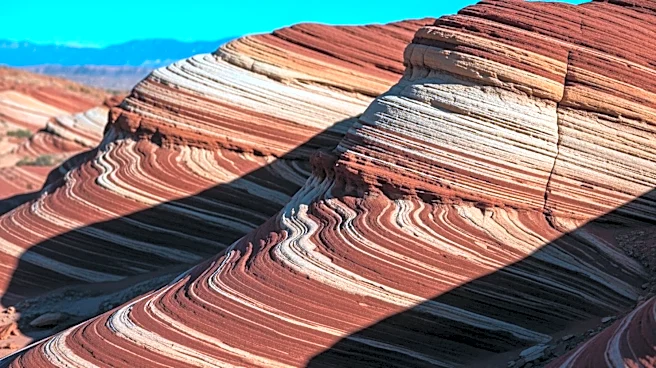







The Guadalupe Mountains, located in West Texas and southeastern New Mexico, are a geological marvel. Known for their stunning landscapes and unique formations, these mountains offer a glimpse into Earth's ancient past. This article explores the geological features of the Guadalupe Mountains, highlighting their significance and the processes that shaped them.
The Capitán Reef and Permian Period
The Guadalupe Mountains are primarily composed of limestone from the ancient Capitán Reef,
formed during the Permian period. This prehistoric reef is one of the most extensive and continuous limestone formations exposed at the surface today. The reef was created in a shallow marine environment, similar to present-day settings in the Bahamas or southern Florida, where warm climates and clear waters favored the formation of carbonate reefs.
The limestone rock of the Guadalupe Mountains contains fossils of reef-dwelling organisms, providing valuable insights into the ecology of the Permian period. Stratigraphers and paleontologists study these formations to understand the ancient marine environments and the organisms that thrived within them.
Uplift and Topographic Relief
The geological history of the Guadalupe Mountains is marked by significant uplift and topographic relief. During the Cenozoic period, the subduction of the Farallon Plate underneath the Western United States led to the thickening of continental crust and the uplift of the Colorado Plateau. This process contributed to the formation of mountainous features in the Basin and Range province, including the Guadalupe Mountains.
The uplift of the Guadalupe Mountains is estimated to have occurred around 20 million years ago, as evidenced by cave speleothem records. The mountains are carved by a series of NW-SE trending canyons, exposing marine rocks at their current elevation. The dry, semi-arid environment has preserved the continuous limestone bedrock, forming large cliffs traceable across the landscape.
Caves and Subterranean Features
The Guadalupe Mountains are home to numerous caves, including the famous Carlsbad Caverns. These caves are formed by groundwater circulating through deep fractures, dissolving limestone and creating vast underground networks. The caves offer a unique glimpse into the subterranean world, with formations that have developed over millions of years.
The caves are not only geological wonders but also host unique ecosystems. The study of these caves provides insights into the processes of limestone dissolution and the formation of speleothems, contributing to our understanding of Earth's geological history.
The Guadalupe Mountains stand as a testament to the dynamic processes that have shaped our planet. Their geological features offer a window into the past, inviting visitors to explore and appreciate the natural wonders that lie within.