



Dacia played a crucial role in Roman military strategy, serving as a key target for expansion and resource acquisition. This article analyzes Dacia's strategic importance in Roman military campaigns and its impact on the Roman Empire's territorial growth.
Strategic Location
Dacia's geographical location made it a prime target for Roman military campaigns. Situated in Southeastern Europe, Dacia was bordered by the Danube River to the south, providing a natural boundary
for Roman expansion. The region's proximity to the Black Sea and its fertile plains made it an attractive area for conquest, offering both strategic and economic benefits.
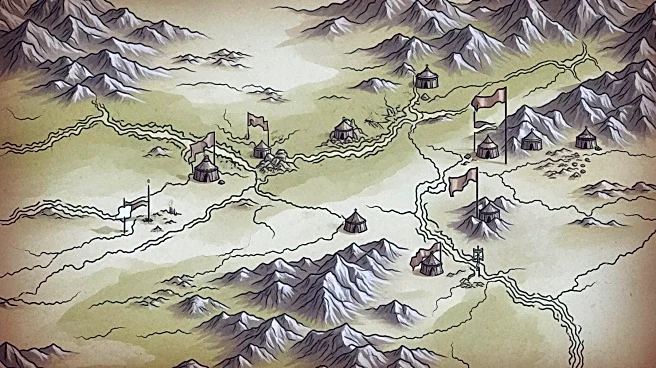
The Carpathian Mountains in the center of Dacia provided natural defenses, making the region difficult to conquer. However, the Romans saw the potential for establishing a stronghold in Dacia, which would serve as a buffer against invasions from northern tribes and facilitate further expansion into Eastern Europe.
Roman Campaigns
The Roman Empire, under Emperor Trajan, launched a series of military campaigns against Dacia in the early 2nd century AD. Trajan's goal was to annex Dacia and secure its valuable resources, including gold mines. The first campaign in 101-102 AD resulted in the siege of the Dacian capital, Sarmizegetusa, and the occupation of part of the kingdom.
The final campaign in 105-106 AD led to the complete conquest of Dacia. The Dacian king Decebalus committed suicide to avoid capture, marking the end of the kingdom's independence. The Romans established the province of Dacia Felix, integrating the region into the Roman Empire and reorganizing its administration.
Impact on Roman Expansion
The conquest of Dacia had significant implications for Roman expansion. It extended Rome's territorial reach and provided access to Dacia's rich mineral resources, boosting the empire's economy. The integration of Dacia into the Roman Empire also facilitated cultural exchange and the spread of Roman influence in the region.
Dacia's strategic location allowed the Romans to strengthen their eastern frontier and protect against invasions from northern tribes. The establishment of military roads and forts in Dacia enhanced Rome's ability to mobilize troops and secure its borders. Overall, Dacia's role in Roman military strategy contributed to the empire's growth and consolidation of power in Eastern Europe.