



The idea of negative-calorie foods has intrigued dieters for years, promising a way to eat without gaining weight. These foods are believed to require more energy to digest than they provide, leading to a net calorie loss. However, despite its popularity, the concept lacks scientific backing and remains a topic of debate.
Understanding Negative-Calorie Foods
Negative-calorie foods are those that supposedly burn more calories during digestion than they contain. The thermic effect of food,
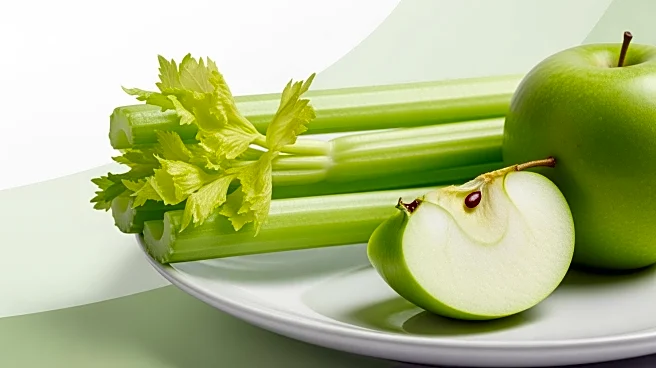
also known as specific dynamic action, is the energy expended in digesting and metabolizing food. For a food to be considered negative-calorie, its thermic effect would need to exceed its caloric content. Commonly cited examples include celery, grapefruit, and cabbage, which are low in calories and high in fiber.
Despite the appealing notion, there is no scientific evidence supporting the existence of negative-calorie foods. While some chilled beverages might have a minimal caloric deficit, the effect is negligible and requires consuming large quantities, which can be dangerous due to the risk of water intoxication.
The Role of Thermic Effect in Dieting
The thermic effect of food plays a role in metabolism, accounting for about 10% of the energy recovered from food. This process, also known as diet-induced thermogenesis, involves burning calories as heat during digestion. While it contributes to overall energy expenditure, it is not significant enough to create a negative-calorie impact.
Diets based on negative-calorie foods often lead to weight loss not because of the foods themselves, but due to their low energy density. These foods fill the stomach without adding many calories, helping to reduce overall calorie intake. A study on a low-fat, plant-based diet showed weight loss attributed to reduced energy density and increased thermic effect, but not due to negative-calorie properties.
Debunking the Negative-Calorie Food Myth
The concept of negative-calorie foods persists in dieting circles, yet it remains unsupported by scientific evidence. Foods claimed to be negative-calorie are typically low-calorie fruits and vegetables, which are beneficial for weight loss due to their fiber content and ability to satisfy hunger.
Chewing gum has been speculated as a negative-calorie food, with mastication burning calories. However, the amount burned is minimal, requiring extensive chewing to achieve any significant caloric deficit. Ultimately, the idea of negative-calorie foods is more myth than reality, serving as a reminder to approach dieting with a critical eye and rely on proven methods for weight management.