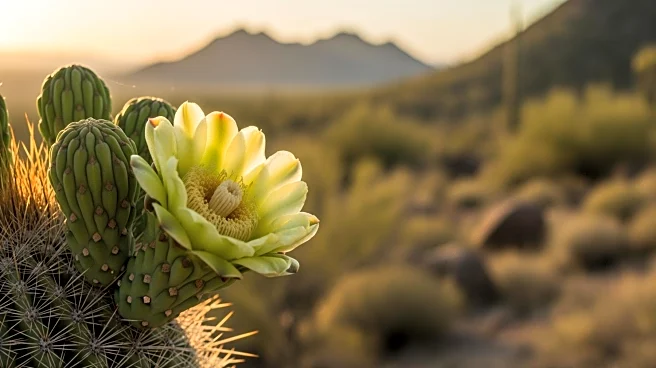




The Sonoran Desert, spanning parts of Arizona, California, and northwestern Mexico, is renowned for its unique and diverse plant life. This desert is home to a variety of flora that have adapted to its harsh conditions, making it a fascinating subject for botanists and nature enthusiasts alike. From towering saguaro cacti to delicate wildflowers, the Sonoran Desert's plant species play a crucial role in its ecosystem.
Unique Plant Adaptations
The Sonoran Desert's flora is
characterized by its ability to thrive in extreme conditions. The desert experiences two distinct seasons of precipitation: winter-spring and summer monsoon months. Many annual plants germinate during the winter-spring rains, showing affinities to the flora of the Mojave Desert. Cacti, such as the iconic saguaro, are well-suited to the desert's environment, with adaptations that allow them to store water and withstand high temperatures.
In the Colorado Desert, a subsection of the Sonoran Desert, plants face even more challenging conditions. Temperatures can soar above 120°F, and annual precipitation is often less than three inches. Despite this, the Colorado Desert hosts a variety of plant life, including burrobush and creosotebush, which give the landscape a grayish hue. These plants have evolved to survive with minimal water, often growing in areas where desert pavement makes the soil impenetrable.
Ecotones and Vegetation Types
The Sonoran Desert is divided into several subdivisions based on vegetation types. North of the U.S.-Mexico border, the Arizona Upland is comparatively lush, with trees and large columnar cacti that can withstand winter frosts. In contrast, the subdivisions south of the border are characterized by plants that cannot tolerate frost. The ecotone between the hotter, drier Colorado Desert and the cooler, wetter Arizona Upland is a transition zone where vegetation density gradually diminishes.
The Central Gulf and California coast subdivisions feature unique plant communities influenced by their proximity to the ocean. Coastal plants benefit from lower evaporation rates and moisture from dew, allowing them to thrive in these areas. The Magdalena and Vizcaino areas further south host distinct flora adapted to their specific environmental conditions.
Conservation and Challenges
The Sonoran Desert's flora faces several challenges, including habitat loss and climate change. Desertification is a significant concern, with land degradation affecting biological productivity. Human activities, such as agriculture and overgrazing, contribute to this process, leading to higher soil and air temperatures and increased desert conditions.
Efforts to conserve the Sonoran Desert's unique plant life are crucial for maintaining its ecological balance. Protecting areas like the Organ Pipe Cactus National Monument and other reserves helps preserve the diverse flora and fauna that call this desert home. Understanding the intricate relationships between the desert's plants and their environment is essential for ensuring the survival of these remarkable species.