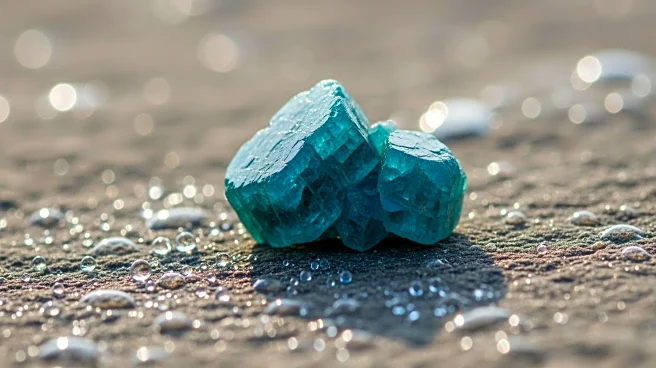




Phosphate is a key player in the story of life's origins, serving as both a structural component of biomolecules and a facilitator of prebiotic reactions. Its unique chemical properties allowed it to stabilize molecules and guide reaction pathways, making it an essential element in the early stages of life on Earth. Understanding phosphate's role in prebiotic chemistry provides insights into how life might have emerged from non-living matter.
Phosphate as a Chemical Facilitator
Phosphate's
ability to exist in multiple ionization states makes it a versatile participant in prebiotic chemistry. It can gain and lose electrons, allowing it to engage in acid-base catalysis and act as a pH buffer. This flexibility enables phosphate to stabilize molecules and reduce interference from reaction intermediates, guiding chemical pathways in a way that could have been crucial for the formation of life's building blocks.
In the context of prebiotic chemistry, phosphate's role extends beyond its structural contributions to biomolecules like DNA and RNA. It also played a non-structural role by facilitating the synthesis of these molecules. By influencing the surrounding chemical environment, phosphate helped create conditions conducive to the formation of complex organic compounds necessary for life.
The Phosphate Problem
Despite its importance, the source of bioavailable phosphate on early Earth remains a mystery, often referred to as the "phosphate problem." During the Hadean eon, phosphorus was likely locked in insoluble minerals, making it unavailable for prebiotic reactions. Researchers have proposed various hypotheses to explain how phosphate became accessible, including the idea that large soda lakes could have concentrated phosphate to levels relevant for prebiotic chemistry.
These lakes, rich in carbonates, could have bound calcium, preventing it from forming insoluble minerals with phosphate. This would allow dissolved phosphate to accumulate, providing a potential source for prebiotic synthesis. Understanding how phosphate became available is crucial for piecing together the puzzle of life's origins.
Phosphate's Legacy in Modern Biology
Phosphate's role in prebiotic chemistry laid the groundwork for its continued importance in modern biology. As a component of DNA, RNA, and ATP, phosphate is integral to genetic information storage, cellular energy transfer, and metabolic processes. Its early contributions to prebiotic reactions highlight its enduring significance in the chemistry of life.
By studying phosphate's role in prebiotic chemistry, scientists gain valuable insights into the conditions that may have led to the emergence of life. As research continues, phosphate will remain a focal point in the quest to understand the origin of life on Earth.