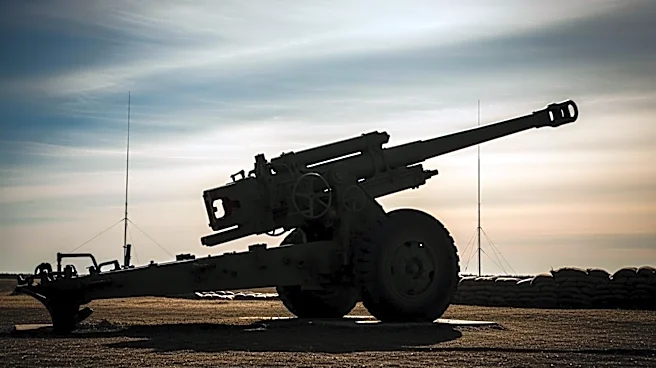

During the Cold War, the M65 atomic cannon, also known as "Atomic Annie," played a crucial role in the strategic military landscape. This artillery piece was designed to fire nuclear shells, providing
a unique capability that combined traditional artillery with nuclear deterrence. Its deployment in key locations underscored its importance in the broader strategy of nuclear deterrence.
Deployment in Strategic Locations
The M65 atomic cannon was deployed in several strategic locations, including West Germany, South Korea, and Okinawa, Japan. These deployments were part of a broader strategy to deter potential aggression from adversaries, particularly the Soviet Union. By positioning the M65 in these regions, the United States aimed to project power and reassure allies of its commitment to their defense.
In West Germany, the M65 was fielded with the 7th US Army, serving as a deterrent against potential Soviet advances into Western Europe. In South Korea, the 8th US Army utilized the M65 to bolster defenses against North Korean aggression. The deployment on Okinawa provided a strategic position in the Pacific, enhancing the United States' ability to respond to threats in the region.
Deterrence and Military Strategy
The M65 atomic cannon was a key component of the United States' nuclear deterrence strategy during the Cold War. Its ability to fire nuclear shells over long distances provided a unique tactical advantage. The presence of the M65 in key locations served as a powerful deterrent, signaling to adversaries that any aggression would be met with a formidable response.
The successful test of the M65 at the Nevada Test Site in 1953 demonstrated its capabilities and reinforced its role in the United States' military strategy. The test, known as "Grable," involved firing a 15-kiloton nuclear shell, showcasing the cannon's ability to deliver a nuclear payload with precision and effectiveness.
Obsolescence and Strategic Shifts
Despite its initial strategic importance, the M65 atomic cannon quickly became obsolete due to advancements in missile technology and the development of more versatile nuclear artillery systems. The introduction of nuclear shells compatible with existing artillery pieces and the advent of rocket- and missile-based nuclear artillery reduced the need for such a specialized weapon.
By 1963, the M65 was retired, replaced by more efficient systems that better aligned with evolving military strategies. However, its legacy as a symbol of Cold War deterrence and military innovation endures. The M65 atomic cannon remains a reminder of the strategic priorities and technological advancements of its time, highlighting the lengths to which nations went to secure strategic advantages during the Cold War.