







Paul Revere's midnight ride is a legendary event in American history, marking a pivotal moment in the lead-up to the Revolutionary War. On the night of April 18, 1775, Revere set out to alert the colonial militias of the approaching British forces, a mission that played a crucial role in the battles of Lexington and Concord. This ride has been immortalized in American culture, largely due to its dramatic nature and the subsequent cultural depictions
that have kept its memory alive.
The Context of the Ride
In the weeks leading up to Revere's ride, tensions between the British authorities and the American colonists were escalating. The British had plans to crack down on the Massachusetts Provincial Congress, which was based in Concord. This was part of a broader strategy to disarm the rebels and arrest their leaders, including Samuel Adams and John Hancock. The colonists, aware of these plans, were on high alert, and Revere's ride was a preemptive measure to warn them of the impending British advance.
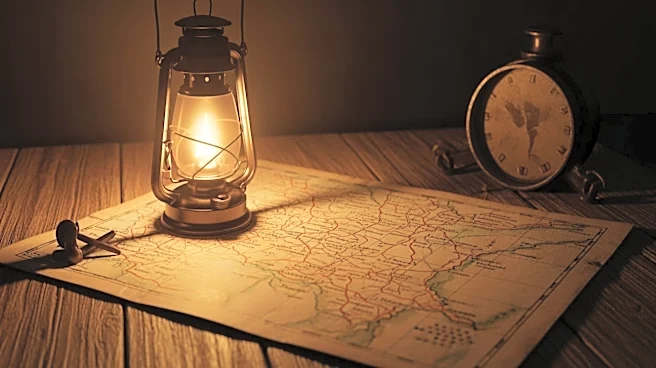
Revere, along with William Dawes and Samuel Prescott, was tasked with spreading the alarm. The ride began with a signal from the Old North Church in Boston, where two lanterns were hung to indicate that the British were advancing by sea. This signal was crucial in alerting the colonists in Charlestown, who then dispatched additional riders to spread the word.
The Ride and Its Immediate Impact
Revere's journey took him through several towns, including Somerville, Medford, and Arlington, as he warned the local militias of the British approach. Contrary to popular belief, Revere did not shout, "The British are coming!" Instead, he used the phrase "The Regulars are coming out," as secrecy was essential to the mission's success.
The ride was not without its challenges. Revere, Dawes, and Prescott were intercepted by a British patrol in Lincoln. While Prescott managed to escape and continue to Concord, Revere was captured and questioned before being released. Despite this setback, the alarm had been successfully raised, allowing the colonial militias to prepare for the battles that would follow.
Cultural Legacy and Commemoration
The midnight ride of Paul Revere has been commemorated in various cultural forms, most notably in Henry Wadsworth Longfellow's 1861 poem, "Paul Revere's Ride." Although the poem contains historical inaccuracies, it has played a significant role in shaping the popular memory of the event. The ride is also depicted in Grant Wood's 1931 painting, "The Midnight Ride of Paul Revere," which captures the dramatic essence of the night.
Today, the route of Revere's ride is marked with signs, and the event is reenacted annually, keeping the spirit of Revere's courageous act alive. This enduring legacy highlights the ride's importance not only as a historical event but also as a symbol of American resilience and determination.