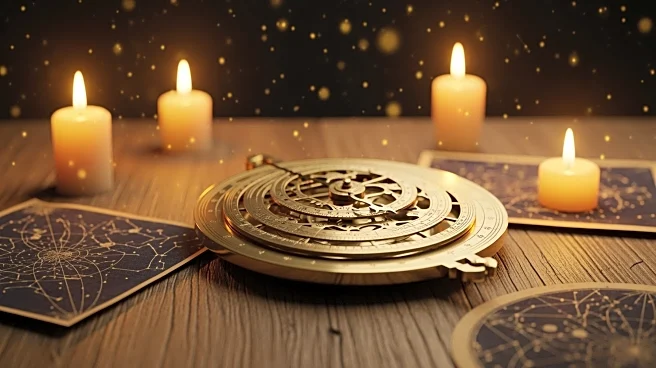




Throughout history, the classical planets have held a prominent place in the cultural and symbolic landscapes of various civilizations. These celestial bodies, visible to the naked eye, were not only objects of scientific study but also sources of inspiration and meaning. The classical planets—Sun, Moon, Mercury, Venus, Mars, Jupiter, and Saturn—were deeply intertwined with mythology, religion, and art, reflecting humanity's enduring fascination with the cosmos.
Mythological and Religious Associations
In many ancient cultures, the classical planets were associated with gods and goddesses, each embodying specific attributes and powers. For instance, the Babylonians linked the planet Venus with Ishtar, the goddess of love and war. Similarly, the Greeks associated Venus with Aphrodite, the goddess of love and beauty. These associations were not merely symbolic; they played a significant role in religious practices and rituals.
The planets were often seen as divine messengers, influencing human affairs and natural events. This belief was particularly strong in astrology, where the positions of the planets were thought to affect individual destinies. The classical planets were also central to the development of the astrological zodiac, with each planet ruling over specific signs and aspects of life.
Artistic and Literary Influence
The classical planets have inspired countless works of art and literature throughout history. In ancient Greece and Rome, the planets were depicted in sculptures, mosaics, and paintings, often portrayed as deities or celestial beings. These artistic representations served both decorative and educational purposes, illustrating the planets' significance in the cosmos.
Literature, too, has been enriched by the symbolism of the classical planets. Poets and writers have drawn on planetary imagery to convey themes of love, war, and fate. The planets' movements and characteristics have been used as metaphors for human emotions and experiences, reflecting the interconnectedness of the cosmos and human life.
Modern Cultural Resonance
Despite the advancements in modern science, the classical planets continue to hold cultural significance. Astrology remains popular, with many people consulting their horoscopes based on the positions of the planets. The planets also feature prominently in popular culture, from music and film to fashion and design.
The enduring appeal of the classical planets lies in their ability to connect us to the universe and to each other. They serve as reminders of our shared history and the timeless quest to understand our place in the cosmos. As symbols of mystery and wonder, the classical planets continue to inspire and captivate, bridging the gap between ancient traditions and contemporary culture.