
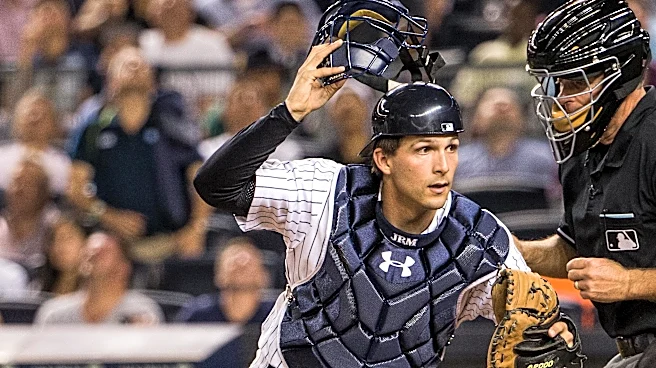
Buddy Rosar's career in Major League Baseball spanned over a decade, during which he played for several teams and left a lasting impact on the sport. From his debut with the New York Yankees to his final games with the Boston Red Sox, Rosar's journey through baseball is marked by his exceptional skills and adaptability. This article explores the chronological progression of Rosar's career, highlighting key moments and transitions.
Early Years with the Yankees
Rosar made his major
league debut with the New York Yankees on April 29, 1939, at the age of 24. Initially serving as a backup catcher to Hall of Famer Bill Dickey, Rosar quickly demonstrated his potential. By the middle of the 1940 season, he was out-hitting Dickey, although he appeared in fewer games. His performance included hitting for the cycle against the Cleveland Indians on July 19, 1940, and setting career-highs with a .298 batting average and a .357 on-base percentage.
Despite being a second-string catcher, Rosar was chosen as a reserve player for the 1942 All-Star Game, a testament to his growing reputation. However, his decision to leave the team without permission to take examinations for the Buffalo police force led to a shift in his career. This incident resulted in Rosar being traded to the Cleveland Indians by the end of the 1942 season.
Success with the Cleveland Indians
Rosar's time with the Cleveland Indians was marked by significant achievements. In 1943, he was among the league leaders in hitting with a .313 average and was named to his second All-Star team. He led American League catchers in assists and baserunners caught stealing, showcasing his defensive skills. Despite being assigned to a war job in 1944, Rosar continued to perform well, hitting among the league leaders with a .324 average in June.
A salary dispute in 1945 led to Rosar being traded to the Philadelphia Athletics, where he would experience one of his best seasons in 1946. He hit for a .283 batting average and posted career-highs with 120 hits and 48 runs batted in, leading American League catchers in assists, runners caught stealing, and fielding percentage.
Final Years with the Athletics and Red Sox
Rosar's defensive skills continued to shine with the Philadelphia Athletics, as he set a record for errorless games by a catcher in 1946. He was selected as the starting catcher for the American League in the 1947 All-Star Game. By 1949, Rosar was traded to the Boston Red Sox, where he served as a third-string catcher before being released in October 1951.
Throughout his career, Buddy Rosar played in 988 games, achieving a .261 batting average with 18 home runs and 367 runs batted in. His journey through Major League Baseball is a testament to his adaptability and skill, leaving a legacy that continues to inspire players today.