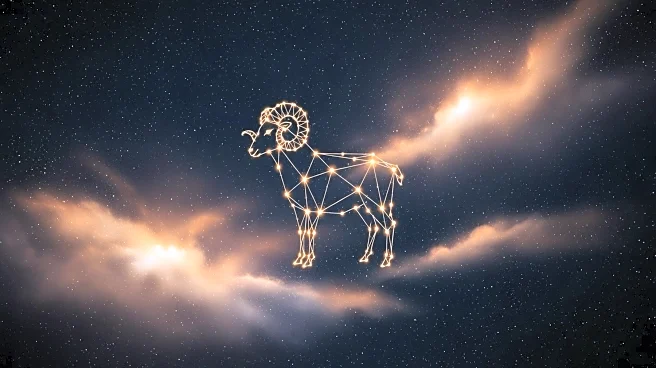




The Aries constellation, known for its representation as a ram, has been interpreted in various ways by different cultures throughout history. Each civilization has imbued Aries with unique mythological and cultural significance, reflecting their beliefs and values. This article explores the diverse cultural interpretations of Aries, highlighting its role in mythology and astronomy across the world.
Babylonian and Egyptian Perspectives
In Babylonian astronomy, Aries was initially known
as MULLÚ.ŠUN.GÁ, or "The Agrarian Worker." This name reflects its role in the agricultural calendar, as described in the MUL.APIN, a comprehensive table of star risings and settings. The constellation's association with agriculture underscores its importance in Babylonian society, where it marked the final station along the ecliptic.
In ancient Egyptian culture, Aries was linked to the god Amun-Ra, depicted as a man with a ram's head. Amun-Ra symbolized fertility and creativity, and Aries was called the "Indicator of the Reborn Sun" due to its position at the vernal equinox. This association highlights the constellation's significance in marking the beginning of the agricultural year and the renewal of life.
Greek Mythology and the Golden Ram
In Greek mythology, Aries is associated with the golden ram that rescued Phrixus and Helle on orders from Hermes. This mythological tale tells of the ram's journey to the land of Colchis, where Phrixus sacrificed it to Zeus, and its fleece became the coveted Golden Fleece. The story of the golden ram underscores Aries' role as a symbol of protection and sacrifice in Greek culture.
The constellation's association with the god Mars further emphasizes its significance in Greek mythology. Aries was linked to the head and its humors, and it was believed to govern Western Europe and Syria. This connection to Mars, both the planet and the god, highlights Aries' role as a symbol of strength and courage.
Aries in Non-Western Cultures
Beyond the Western world, Aries has been interpreted in various ways by different cultures. In traditional Chinese astronomy, stars from Aries formed part of several constellations, including 'Lou,' associated with the ritual sacrifice of cattle. In Hindu astronomy, Aries was known as "Aja" and "Mesha," with the first lunar mansion called "Aswini."
In the Marshall Islands, Aries was part of a constellation depicting a porpoise, while in Hebrew astronomy, it was named "Taleh," symbolizing the "Lamb of the World." These diverse interpretations highlight the constellation's universal appeal and its ability to transcend cultural boundaries.
The Aries constellation has been a source of inspiration and symbolism for cultures around the world. From its role in agricultural calendars to its mythological associations, Aries continues to captivate and intrigue, reflecting the rich tapestry of human history and imagination.