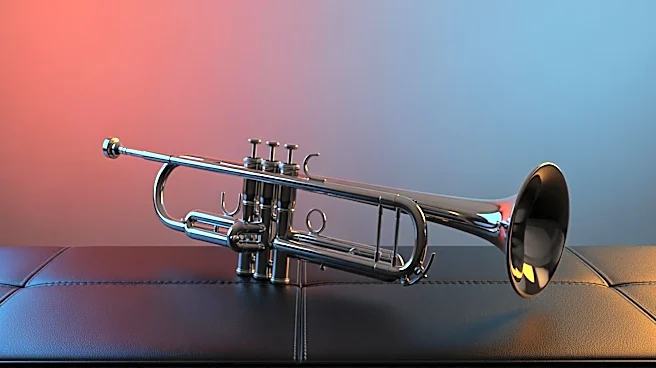







Miles Davis, a towering figure in jazz, underwent a significant transformation in his musical style during the late 1940s. Initially a key player in the bebop movement, Davis eventually became a pioneer of cool jazz. This transition was marked by his departure from Charlie Parker's quintet and the subsequent formation of his own band, which led to the creation of the seminal album 'Birth of the Cool.'
The Bebop Years
From 1944 to 1948, Miles Davis was an integral
part of Charlie Parker's quintet, a group that was at the forefront of the bebop movement. Bebop was characterized by its fast tempos, complex chord progressions, and virtuosic solos. Davis, however, found himself struggling to keep up with the rapid pace and high ranges favored by his contemporaries like Parker and Dizzy Gillespie. Instead, he chose to focus on the mid-range of his instrument, developing a more melodic and lyrical style.
Despite his contributions to bebop, Davis was increasingly dissatisfied with the limitations of the genre. He sought a new musical direction that would allow for greater expression and innovation. This desire for change was compounded by growing tensions within Parker's quintet, prompting Davis to leave the group in 1948.
The Birth of Cool Jazz
After leaving Parker's quintet, Davis began collaborating with arranger Gil Evans and other forward-thinking musicians in New York City. These collaborations led to the formation of a nonet, a nine-piece ensemble that included instruments not typically associated with jazz, such as the French horn and tuba. This group aimed to create a new sound that blended elements of jazz with classical music techniques.
The nonet's music was characterized by slower tempos, intricate arrangements, and a focus on harmony and texture. This approach was a stark contrast to the frenetic energy of bebop and laid the groundwork for what would become known as cool jazz. The group's recordings, made between 1949 and 1950, were eventually compiled into the album 'Birth of the Cool,' which was released in 1957.
Impact and Legacy
Miles Davis's transition from bebop to cool jazz was a pivotal moment in his career and in the history of jazz. 'Birth of the Cool' was not only a departure from the bebop style but also a significant influence on the development of modern jazz. The album's innovative use of arrangement and instrumentation inspired countless musicians and helped to establish cool jazz as a major movement in the 1950s.
Davis's willingness to explore new musical territories set the stage for his later work in modal jazz and jazz fusion, solidifying his reputation as one of the most influential figures in the history of jazz.