








Pressure cookers are a staple in many kitchens, known for their ability to cook food quickly and efficiently. But how exactly do they work? This article delves into the mechanics of pressure cooking, explaining the science behind their speed and efficiency.
The Science of Pressure Cooking
At the heart of pressure cooking is the principle that increasing pressure raises the boiling point of water. In a sealed pressure cooker, steam is trapped, which increases the internal pressure.
This elevated pressure raises the boiling point of water above the standard 100°C (212°F), allowing food to cook at higher temperatures.
The ideal gas law, expressed as PV = nRT, describes the relationship between pressure (P), volume (V), and temperature (T) in a gas. In a pressure cooker, the volume and amount of steam are fixed, so the temperature can be controlled by adjusting the pressure. For example, at 1 bar (15 psi) above atmospheric pressure, water boils at approximately 120°C (248°F), significantly reducing cooking times.
Efficiency and Heat Transfer
Pressure cookers are highly efficient because they use steam to transfer heat rapidly to food. Unlike ovens, which contain air that slows heating, pressure cookers flush air from the vessel and replace it with hot steam. This steam condenses on the food, transferring a large amount of heat quickly and evenly.
The efficiency of pressure cookers also stems from their ability to maintain a consistent cooking temperature. Once the desired pressure is reached, the heat source can be reduced, conserving energy. Modern pressure cookers are designed to minimize steam loss, further enhancing their efficiency.
Safety Features and Modern Innovations
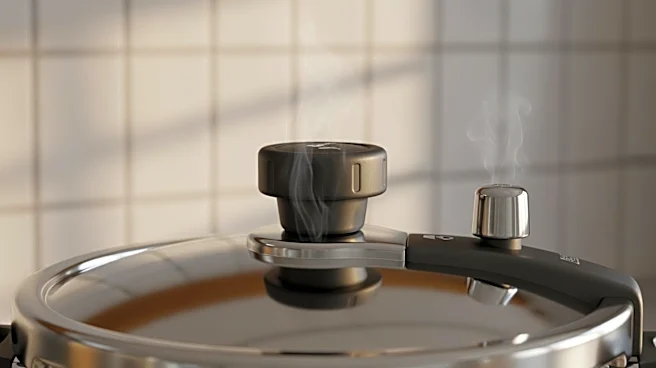
Safety is a critical aspect of pressure cooking. Modern pressure cookers are equipped with multiple safety features to prevent accidents. These include pressure release valves, interlock lids, and mechanisms that prevent the cooker from being opened while under pressure.
Third-generation electric pressure cookers have taken safety and convenience to new levels. They feature digital controls that automatically regulate temperature and pressure, ensuring consistent results. Some models even offer smart programming with pre-set cooking times and settings for various foods.
The evolution of pressure cookers has also seen the introduction of multifunctional models, such as the Instant Pot, which combines pressure cooking with other functions like slow cooking and air frying. These innovations have made pressure cookers more versatile and appealing to a wider audience.
In conclusion, the mechanics of pressure cooking are rooted in simple scientific principles, yet they offer remarkable efficiency and convenience. As technology continues to advance, pressure cookers are likely to become even more sophisticated, further cementing their place in modern kitchens.