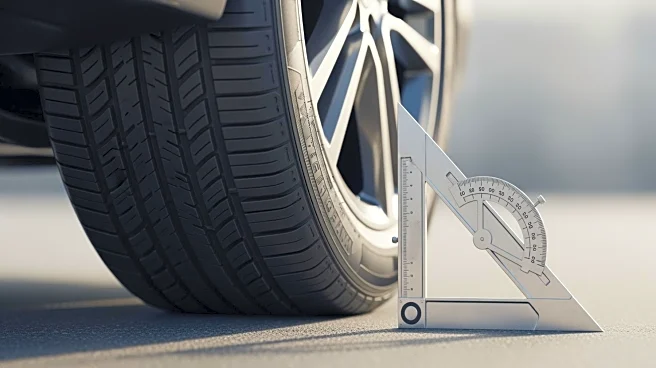




Camber angle is not only a critical factor in vehicle handling but also plays a significant role in tire wear. The angle at which a wheel is tilted can lead to uneven tire wear, affecting the longevity and performance of the tires. Understanding how camber angle influences tire wear is essential for vehicle maintenance and ensuring optimal driving conditions.
Camber Wear: Causes and Effects
Camber wear occurs when the camber angle is set excessively, either positively or negatively.
This results in uneven load distribution across the tire tread, causing one side to wear out faster than the other. For instance, excessive negative camber places more load on the inboard shoulder of the tire, leading to quicker wear compared to the outboard shoulder.
Conversely, positive camber places more load on the outboard shoulder, causing it to wear more rapidly. This uneven wear pattern is a common reason why vehicles are not typically aligned with extreme camber settings from the factory. Maintaining a balanced camber angle is crucial to prevent premature tire wear and ensure the tires perform effectively over their lifespan.
Balancing Camber for Optimal Tire Performance
While excessive camber can lead to uneven tire wear, a minor negative camber setting may slightly improve tire wear. During turns, the vehicle's center of gravity shifts towards the outside of the outer wheel, placing load on the outboard shoulder. A small negative camber angle allows this load to be more evenly distributed across the tread, potentially enhancing tire longevity.
Proper camber management involves finding a balance that minimizes tire wear while optimizing vehicle handling. This requires careful consideration of the suspension design and the specific driving conditions the vehicle will encounter. Adjustments to the camber angle should be made with the goal of achieving a harmonious balance between handling performance and tire wear.
Practical Considerations for Vehicle Maintenance
For vehicles with adjustable camber angles, regular maintenance checks are essential to ensure the camber settings remain optimal. This includes monitoring tire wear patterns and making necessary adjustments to prevent uneven wear. In cases where the camber angle is fixed, such as in MacPherson strut suspensions, other factors like tire pressure and alignment should be regularly checked to maintain tire health.
Understanding the impact of camber angle on tire wear is crucial for vehicle owners and maintenance professionals. By managing camber settings effectively, drivers can ensure their tires last longer and perform better, ultimately enhancing the overall driving experience.