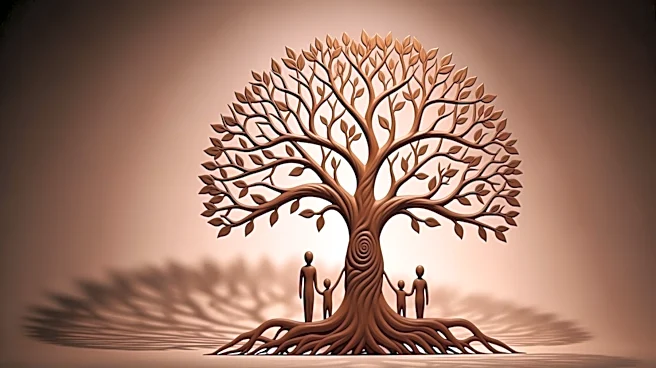







Families play a crucial role in the socialization and enculturation of individuals, shaping their values, beliefs, and behaviors. As the primary social unit, families provide a framework for learning and development, influencing how individuals interact with the broader community. This article explores the various ways families contribute to socialization and the impact they have on individual identity.
Family as a Socializing Agent
From birth, families serve as the first socializing
agents, introducing children to cultural norms and expectations. Through daily interactions, children learn language, social skills, and moral values, which are essential for functioning in society. Parents and caregivers model behaviors and attitudes, providing guidance and support as children navigate their social environments.
The family of orientation, consisting of parents and siblings, plays a significant role in locating children socially. It is within this unit that children first experience social roles and relationships, learning to negotiate conflicts and cooperate with others. These early experiences lay the foundation for future interactions and contribute to the development of social identity.
Enculturation and Identity Formation
Enculturation, the process by which individuals learn and adopt the cultural norms of their society, is deeply rooted in family dynamics. Families transmit cultural heritage, traditions, and values, helping individuals understand their place within a larger cultural context. This transmission occurs through rituals, storytelling, and shared experiences, reinforcing cultural identity.
As children grow, they begin to form their own identities, influenced by family interactions and external influences. The family of procreation, which individuals create through marriage and childbearing, further shapes identity by introducing new roles and responsibilities. This transition from family of orientation to family of procreation marks a significant shift in socialization, as individuals apply learned values to new contexts.
Challenges and Adaptations
While families are central to socialization, they also face challenges that can impact their ability to fulfill this role. Changes in family structures, such as single-parent or blended families, require adaptations in socialization practices. Economic pressures, cultural shifts, and technological advancements also influence how families socialize their members.
Despite these challenges, families remain resilient, finding ways to adapt and support their members. Communication, flexibility, and understanding are key to navigating these changes and ensuring effective socialization. As society continues to evolve, families will play an essential role in preparing individuals to engage with the world around them.