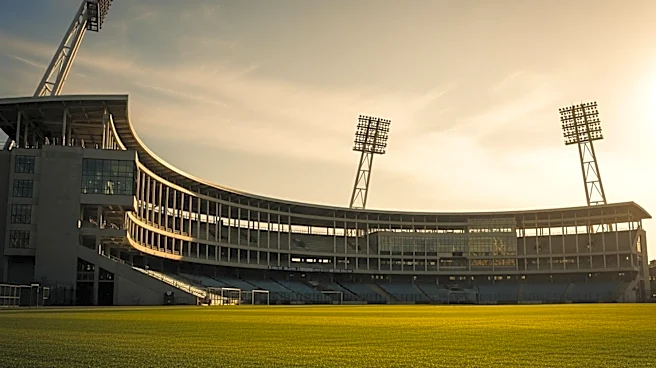

Stade Vélodrome in Marseille, France, is not just a local sports venue; it is a global stage for some of the most prestigious international sports events. From the FIFA World Cup to the UEFA European Championship,
the stadium has played a pivotal role in bringing world-class sports to Marseille. This article delves into the stadium's significance as a host for international competitions and its impact on the city.
Hosting the FIFA World Cup
The Stade Vélodrome first gained international prominence during the 1938 FIFA World Cup, where it hosted several matches, including a semi-final. This early exposure set the stage for future international events. The stadium's most significant transformation came in preparation for the 1998 FIFA World Cup, when it underwent extensive renovations to increase its capacity and modernize its facilities.
During the 1998 World Cup, the Vélodrome hosted seven matches, including a quarter-final and a semi-final. The event was a resounding success, showcasing the stadium's ability to accommodate large crowds and deliver a world-class experience for fans and players alike. This success cemented the Vélodrome's reputation as a premier venue for international football.
UEFA European Championship and Rugby World Cup
In addition to football, the Stade Vélodrome has been a key venue for the UEFA European Championship, hosting matches in the 1960, 1984, and 2016 editions. Each tournament brought significant attention to Marseille, highlighting the city's passion for sports and its capacity to host large-scale events.
The stadium has also been a regular host for the Rugby World Cup, further diversifying its portfolio of international events. The 2007 and 2023 Rugby World Cups saw the Vélodrome welcome fans from around the world, reinforcing its status as a versatile and adaptable venue. These events have not only boosted the local economy but also enhanced Marseille's global profile as a sports destination.
Impact on Marseille and Future Prospects
The Stade Vélodrome's role in hosting international sports events has had a profound impact on Marseille. The influx of visitors during these events has provided a significant economic boost, benefiting local businesses and tourism. Moreover, the stadium's international exposure has helped position Marseille as a vibrant and dynamic city on the global sports map.
Looking to the future, the Stade Vélodrome is set to continue its legacy as a hub for international sports. With the 2024 Summer Olympics on the horizon, the stadium will once again be in the spotlight, hosting football matches as part of the Olympic program. As Marseille prepares for this prestigious event, the Vélodrome remains a symbol of the city's enduring commitment to sports and its ability to host the world's best athletes.