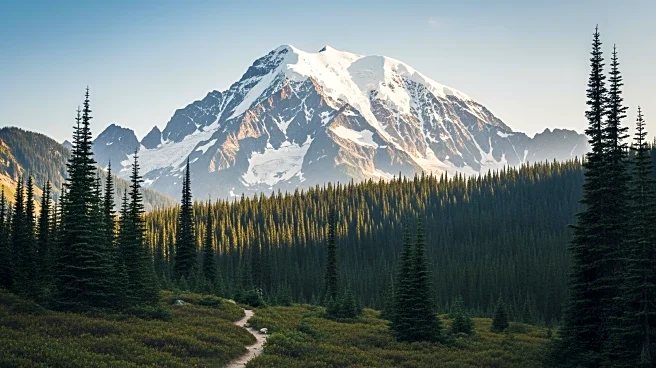



Mount Rainier National Park, located in Washington state, is a testament to the natural beauty and historical significance of the region. Established on March 2, 1899, it became the fourth national park in the United States, preserving the majestic Mount Rainier and its surrounding landscapes. This article delves into the park's historical development, highlighting key milestones and the efforts that led to its creation.
Early Exploration and Advocacy
The journey to establish Mount
Rainier National Park began with early exploration and advocacy by notable figures such as John Muir. Muir visited Mount Rainier in 1888, and his experiences there played a crucial role in reinvigorating his dedication to preserving nature as national parks. At the time, national forests were being created under the utilitarian "conservation-through-use" view, but Muir and his supporters advocated for a more protected status.
The Pacific Forest Reserve, which included Mount Rainier, was created in 1893. Muir quickly persuaded the Sierra Club to support a movement to protect Rainier as a national park. This effort was joined by other groups, including the National Geographic Society and scientific associations, who wanted Mount Rainier preserved for studying volcanism and glaciology.
Legislative Efforts and Challenges
The path to establishing Mount Rainier National Park was fraught with legislative challenges. The effort to push a bill through Congress lasted over five years and involved six different attempts. Congress eventually agreed to the park's creation, but only after assurances that none of the new park was suitable for farming or mining and that no federal appropriations would be necessary for its management.
President William McKinley signed the bill authorizing the creation of Mount Rainier National Park on March 2, 1899. This marked a significant milestone as it was the first national park created from a national forest. The park was dedicated "for the benefit and enjoyment of the people" and for the preservation of its natural wonders.
Cultural and Natural Significance
Mount Rainier National Park is not only a natural wonder but also a cultural landmark. The park's designation as a National Historic Landmark in 1997 highlights its significance in showcasing the National Park Service rustic-style architecture of the 1920s and 1930s. The Paradise Inn, a masterpiece of early NPS master planning, exemplifies this architectural style.
Today, Mount Rainier National Park continues to provide opportunities for people to experience and understand the park environment. It sustains wilderness values and offers a glimpse into the dynamic processes of a glaciated volcano. The park's history and establishment reflect the dedication to preserving natural beauty for future generations.