



Motor racing circuits have a rich history that dates back to ancient times, evolving significantly over the centuries. From the early days of horse and chariot racing to the high-tech facilities of today, the development of racing circuits reflects the advancements in technology and the growing popularity of motorsport. This article delves into the evolution of motor racing circuits, highlighting key milestones and changes over time.
Ancient and Medieval Beginnings
The concept of
racing circuits can be traced back to ancient civilizations, where structures like the hippodromes of Ancient Greece and the circuses of the Roman Empire were built for horse and chariot racing. These early tracks were designed to accommodate large crowds, with the Circus Maximus in Rome capable of holding up to 200,000 spectators.
During the Middle Ages, racing continued to be a popular pastime, with records of public racecourses being established in places like Newmarket, London, as early as 1174. These early circuits were primarily used for horse racing, with tracks typically made of grass or soil.
The Advent of Motor Racing
The late 19th and early 20th centuries saw the advent of the automobile, leading to the development of tracks specifically designed for motor racing. The earliest motor racing tracks were often modified horse-racing courses, with the first automobile race taking place in 1896 at Narragansett Park in Rhode Island.
As the popularity of motor racing grew, purpose-built tracks began to emerge. The Indianapolis Motor Speedway, opened in 1909, is one of the most iconic early motor racing circuits. During this period, motorcycle races were also held on high-banked wooden tracks known as board tracks, which were popular in the 1920s.
Modern Circuit Design
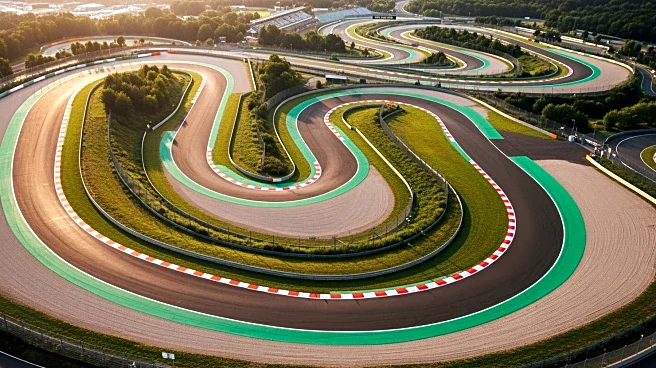
Today, motor racing circuits are designed with a focus on safety and spectator experience. Modern tracks feature advanced safety measures, including run-off areas, barriers, and high fencing, to protect both drivers and spectators. The layout of a circuit is carefully planned to provide a challenging and exciting race, with a mix of high-speed straights and technical corners.
In addition to permanent circuits, temporary street circuits have become a popular feature of modern motorsport. These circuits, set up on public roads, offer a unique racing experience and are often used to promote tourism in host cities. The design and construction of modern circuits require significant investment and collaboration between engineers, architects, and local authorities.
In conclusion, the evolution of motor racing circuits reflects the broader history of motorsport, showcasing the advancements in technology and the growing global appeal of racing. From ancient tracks to modern facilities, these circuits continue to be at the heart of the motorsport world, providing thrilling experiences for drivers and fans alike.